




What is the reason for a cat drinking a lot of water and is it a problem? If you have recently noticed a change in your kitten’s drinking pattern and keep encountering an empty water bowl, you have every right to be concerned. In fact, some medical conditions cause cats to drink more water. In this article, you will learn what diseases lead to increased water consumption in cats.
How much water does a cat need during the day?
The first question you should ask yourself is how much water intake is normal for a cat? There is a simple way to find the answer. If you can inform your veterinarian about the amount of water your cat drinks in a day, he can quickly calculate how much water your cat needs daily.
Generally, a cat should not drink more than 45 milliliters of water for every 0.5 kilograms of its weight. 45 milliliters is equivalent to 3 tablespoons. That means if your cat weighs 4 kilograms, it should not drink more than 360 milliliters of water.

How to tell if a cat is drinking too much water?
How can you tell if your cat is really drinking too much water? Accurately determining this can be challenging, especially if you have several cats that share the same water bowl. Unless you want to separate your cat and closely measure how much it drinks daily, you will need to look for other clues to figure out whether your cat is drinking excessively or not. Some of these clues include:
- The cat is seen more often around the water bowl than before.
- The water bowl often runs empty and needs to be refilled.
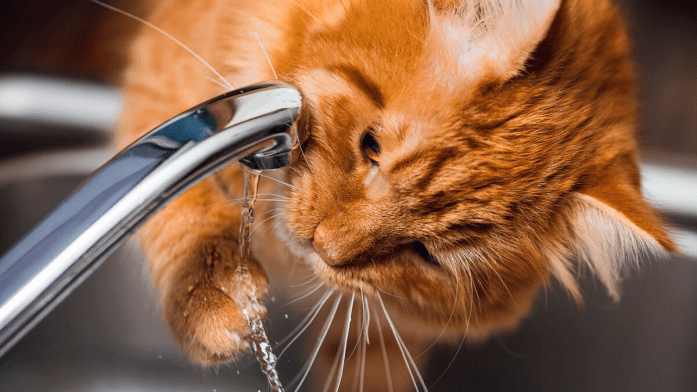
- The cat starts drinking from places it didn’t before, such as the sink, pond, or toilet. (If your cat has always had these drinking habits, there is no need for concern).
- Your cat uses its litter box frequently.
Reasons for excessive water consumption in cats
The first reason for excessive drinking in animals might be simply its nature, meaning it genuinely needs more water. In this case, everything is normal. If your cat has had a thirst for water since kittenhood, an increase in its daily water intake should not be a cause for concern.
Additionally, consider whether the increase in your cat’s thirst coincides with warmer weather. Also, does your cat eat dry food, or do you use canned food for its diet? In this case, consult with your veterinarian regarding whether dry or wet food is better for the cat.
Keep in mind that problems caused by hormonal changes such as hyperthyroidism, kidney issues, liver problems, and diabetes can also lead to excessive thirst in cats.
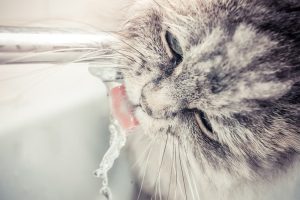
A cat that loves water
Some cats are fascinated by water, especially if it comes from a small fountain, as you have likely noticed by now, your cat loves running water. Whether it flows from a fountain or a hose doesn’t matter. These cats rush to the sink as soon as they hear the sound of water from the kitchen faucet to quench their thirst.
If your cat has always enjoyed drinking water, then its increased water consumption is also normal, and there’s no need to worry.
Discontent with food
In many cases, a cat’s appetite changes, and during this time it may develop a greater thirst. It’s true that choosing high-quality dry food from reputable brands like Hill’s, Royal Canin, or Josera for your pet minimizes the risk of dietary disturbances to zero. However, in some cases, even cats that have been fed the best dry food can encounter this problem.
Increased water consumption in hot weather
Cats often increase their water intake in the heat, especially if they spend time outdoors. During these times, you should be cautious of heatstroke in cats.
Increased physical activity
Increased physical activity also encourages your cat to drink more water. With GPS, you can precisely see your cat’s activity levels (and where it goes).

Diarrhea in cats
In this case, the primary issue is diarrhea in cats. They drink more water to compensate for the fluids they have lost. Since the amount of water in the cat’s body is low, diarrhea quickly leads to dehydration in cats. However, keep in mind that in rare cases, diarrhea may cause excessive drinking, so it’s better to leave the diagnosis to your veterinarian.
Excessive drinking in cats due to medication
Some medications, such as diuretics prescribed for heart disease, cause cats to drink more water than usual.
Diseases associated with excessive drinking in cats
If none of these scenarios describe the situation with your cat, there may be a more serious problem: the most common reason cats drink excessively is that they have an underlying medical issue. To learn more about the problems that lead to excessive drinking in cats, continue reading.
Diabetes Mellitus in Cats
Diabetes mellitus occurs when your cat’s body cannot properly process glucose (sugar) from food, meaning that glucose is not available for fueling body systems. This results in high blood sugar levels. This condition causes your cat to drink more water to dilute the sugars. Diabetic cats may become lethargic and lose weight despite eating more food. Older cats and overweight cats are at risk for diabetes. By keeping your cat at a healthy weight, you can reduce their risk of developing diabetes. If diabetes is suspected, the veterinarian will collect blood and urine samples to measure glucose levels in the cat’s body. Diabetes mellitus in cats is treated similarly to diabetes in humans. Treatment may include dietary changes or insulin administration. Remember that diabetes is a serious condition that requires frequent veterinary visits and ongoing monitoring by you. With proper care, diabetes in cats can be successfully managed.
Excessive Drinking Due to Urinary Tract Disease
Urinary tract disease is caused by inflammation in the bladder. As a result of this inflammation, your cat may be unable to urinate and may experience pain. Urinary tract disease can occur due to infection or stress. Cats with urinary tract disease may urinate outside the litter box, show discomfort when urinating, and may have blood in their urine.
The veterinarian may recommend pain relief medications for urinary infections. Since stress may contribute to urinary infections, try to provide separate food bowls and litter boxes for each cat to minimize territorial conflicts. Providing a safe and private sleeping space for your cat also helps reduce stress. Overall, urinary infections can become a chronic problem in cats and may require ongoing treatment. Internists at the Central Veterinary Hospital are well-trained to manage this condition and will provide you with the necessary guidance.

Chronic Kidney Disease in Cats
Proper kidney function is vital for a cat’s health. The kidneys remove toxins from the blood, help regulate blood pressure, and release hormones that stimulate the production of new red blood cells. As cats age, experiencing chronic kidney disease becomes common for them. In this condition, kidney function begins to decline. This decline may occur gradually over months or even years. Cats with chronic kidney disease often drink more water out of increased thirst because their kidneys are working harder to function properly. Cats with chronic kidney disease may also become lethargic and lose their appetite due to the buildup of toxins that are normally eliminated by the kidneys. Chronic Kidney Disease in Cats can be diagnosed early through blood and urine tests. Veterinarians often conduct these tests routinely as cats age. Treatment may include dietary changes or medication.
Liver Disease
Excessive thirst may indicate liver disease in cats. The liver plays an important role in your cat’s health by controlling many of the chemical processes necessary for the body’s normal function. Besides drinking more than usual, cats with liver disease often show jaundice. The eyes and mucous membranes may take on a yellowish color due to jaundice. The abdomen may also become swollen due to fluid accumulation. Liver disease can be managed if diagnosed early. Dietary changes can help reduce the liver’s workload and slow the progression of the disease, but liver disease is complex and requires ongoing treatment by a veterinarian.
Hyperthyroidism
If your feline friend is drinking more water than usual and has lost weight, they may be at high risk for hyperthyroidism. The increased thyroid hormone can intensify hunger in the cat. In this condition, the cat may become irritable and louder than usual.
Elevated thyroid hormone levels raise blood pressure and can lead to heart problems in cats over time. However, remember that kidney problems can also lead to increased thirst and weight loss in cats. But in the case of kidney issues, the cat’s appetite does not increase. This is why the veterinarian regularly monitors your cat’s weight.

When should you see a veterinarian?
Whenever you notice excessive drinking in your cat, it’s best to schedule a visit with the veterinarians at the Central Veterinary Hospital. Various reasons can lead to a cat’s increased thirst for water, so it’s better to have them assessed through complete examinations and tests by a veterinarian.
If your cat’s general condition is good and the only noticeable sign is their increased thirst, it’s likely that there is no health threat to the cat. However, if the thirst is accompanied by other symptoms, it’s advisable to discuss the issue with the veterinarian.
Frequently Asked Questions
Why does a cat drink a lot of water? It may be due to natural curiosity, heat, or medical issues such as diabetes, kidney disease, liver issues, or hyperthyroidism.
How much water does a cat need daily?
About 45 milliliters for each 0.5 kilograms of weight per day.
Is excessive drinking always a serious problem?
Not always; however, if accompanied by other symptoms like weight loss or lethargy, a veterinary examination is necessary.
Sources: petsradar – veterinaryemergencygroup – greatpetcare