





Many people wonder what the purpose of contrast materials is in diagnosing animal diseases and how it is used for this purpose. Contrast or radiopaque materials are substances used for imaging the internal organs of dogs and cats, providing a high-resolution image for veterinarians. By observing this image, the veterinarian can diagnose and treat the illness of home dogs and cats.
What is meant by contrast material?
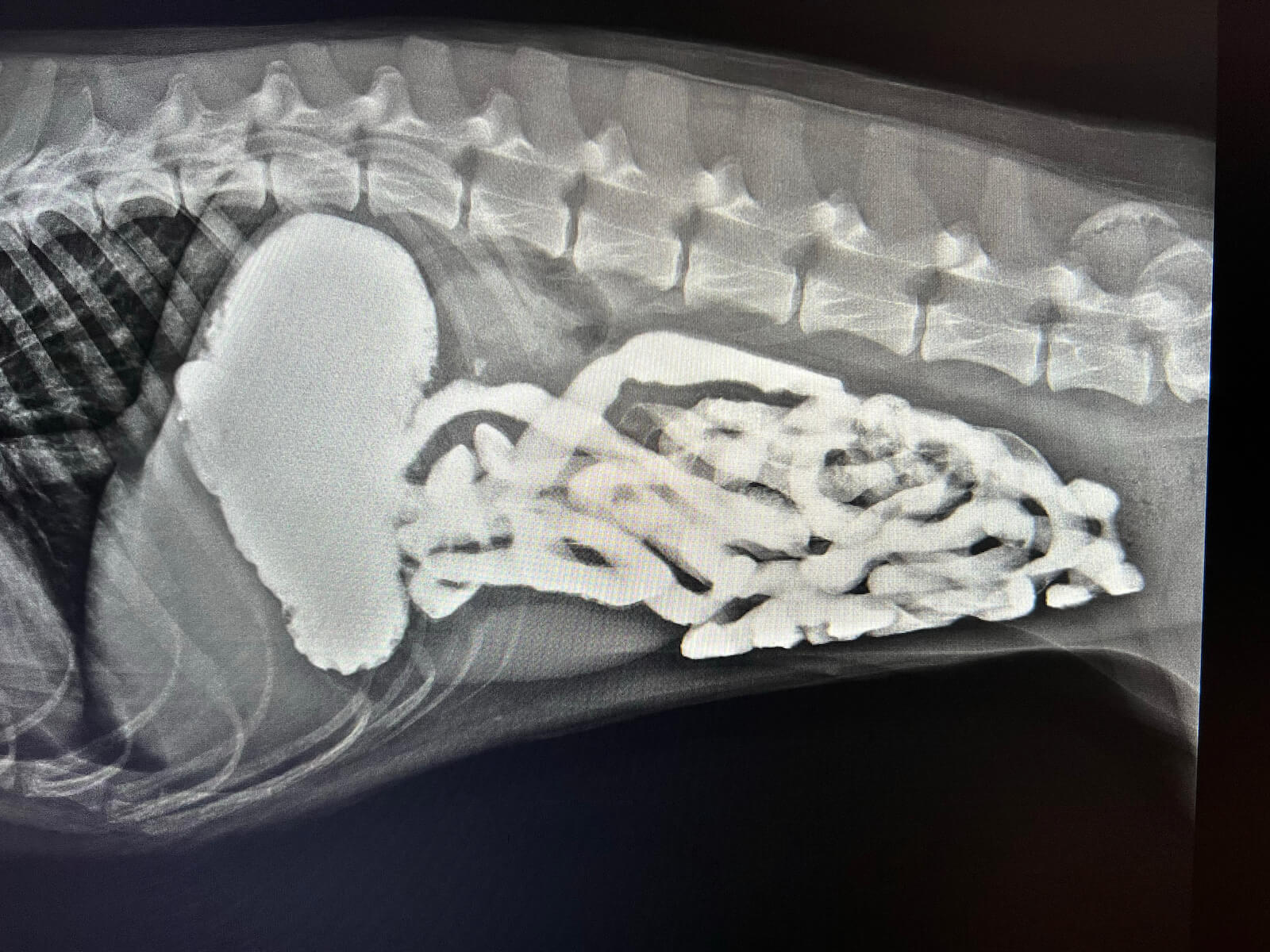
Contrast material refers to substances that are introduced into the body either orally or through injection, creating different densities within the body. These densities will be higher or lower compared to the natural organs. This process improves the differentiation of internal structures and facilitates disease diagnosis. In some cases, a veterinarian may use substances that increase or decrease the density of organs within the body in combination. One of the most common oral contrast materials is used in the digestive system, serving various purposes; however, the most common reason for its use is to diagnose gastrointestinal obstruction. Presence of a mass in the gastrointestinal tract, ingestion of foreign bodies, intestinal twisting, and intussusception are among the reasons for intestinal blockage in dogs and cats, which radiology in pets can assist veterinarians with.
The application of contrast materials in diagnosing diseases in pets
Veterinarians utilize radiopaque materials for various parts of the digestive system. Depending on which organ or part of the digestive system, such as the esophagus, stomach, or small intestines, is being examined, different concentrations are used. When radiopaque materials accumulate in a part of the body, X-rays cannot pass through them, so during radiology, this part of the internal organs appears whiter or clearer than other parts, allowing the veterinarian to diagnose various potential diseases in pet dogs and cats.
How to diagnose diseases in dogs and cats using contrast materials
Veterinarians consider several important factors when diagnosing diseases using contrast materials in dogs and cats, including:
- The rate of passage of the radiopaque material through the gastrointestinal tract
- The speed of passage of these materials
- The duration between swallowing the radiopaque material and its excretion from the body of the dog and cat
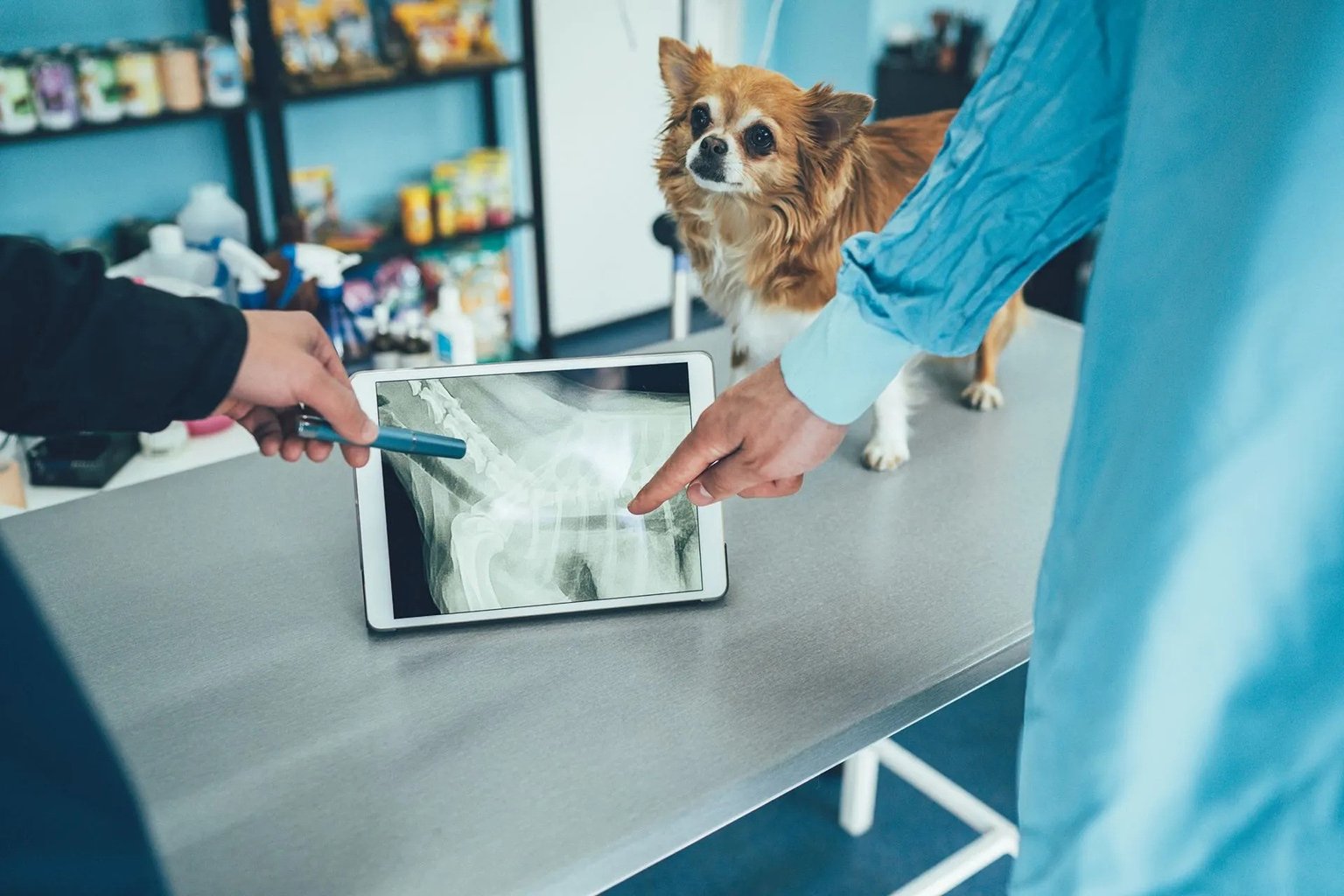
Remember that oral contrast materials do not get absorbed by the body for diagnosing diseases in the gastrointestinal tract and are completely excreted; thus, rumors about the effects of contrast materials on kidney diseases in dogs and cats are completely false, and there is no scientific evidence to support this claim. In fact, these materials only enter the body and cause changes in the density of the gastrointestinal organs, being excreted through feces.
Types of contrast materials for diagnosing diseases in dogs and cats
The use of contrast materials in diagnosing diseases in pets has led veterinarians to produce various models of these materials. Typically, these materials are classified based on osmolality, with both high and low osmolality radiopaque materials currently available on the market. Low-osmolality radiopaque materials are newer and more expensive than high-osmolality materials; however, purchasing high-osmolality radiopaque material is beneficial for diagnosing certain diseases in male and female dogs. For animals allergic to radiopaque substances, purchasing low-osmolality contrast materials is a good option. The veterinarian determines the osmolality dose in the radiopaque material based on initial examinations and by conducting multiple tests on your pet. Furthermore, after determining the dose according to the age and physical condition of your dog and cat, various tests will be conducted to determine the precise osmolality in the contrast material. This material must be accurately determined and prescribed under the supervision of a radiology specialist for pets.
Benefits of contrast materials in diagnosing diseases in pets
Radiopaque materials offer numerous benefits in diagnosing diseases in pets like cats and dogs. Veterinarians can easily use them for radiography of the internal organs of animals. Currently, these materials are widely used in veterinary clinics as mentioned in the following points:
- Radiopaque materials increase the accuracy of radiographic diagnosis, enabling veterinarians to observe internal structures more easily due to color contrast, thus facilitating the diagnosis of male and female cat diseases.
- Radiopaque materials help veterinarians to correctly diagnose the disease of home cats and dogs, reducing the need for surgery. For example, intravenous contrast can assist the veterinarian in diagnosing vascular narrowing, aneurysms, and other vascular abnormalities, avoiding surgical interventions.
- One of the advantages of using contrast materials in diagnosing diseases in pets is that these materials can determine the condition of the pet’s illness. For example, this material can help determine the size, location, and spread of tumors in pets for veterinarians to assess.
Side effects of contrast materials in dogs and cats
Although radiopaque materials do not have side effects for dogs and cats; some issues have occasionally been observed related to their use, which are mentioned below:
- Allergy in pets
- Skin irritation or itching
- Formation of red or dark spots on the skin
- Muscle weakness
- Observation of yellow spots on the eyes
- Swelling and hardening of the pet’s skin
Conclusion
In Veterinary medicine uses a substance called contrast agent for diagnosing various diseases in pets such as dogs and cats. This substance is administered to the animal either through injection or orally, creating different densities that prevent X-rays from passing through during radiographic imaging. The result of this process is obtaining clear and bright images of the internal organs of animals, which helps the veterinarian easily examine the specific organ and diagnose the disease in dogs and cats. Our colleagues in the emergency department of the central veterinary hospital are available 24/7 to provide services for pets such as dogs and cats for quick and easy disease diagnosis using contrast agents and all laboratory equipment in emergency situations.