






Kissing bugs and ticks pose a serious threat to the health of pets. Ticks are particularly responsible for transmitting bacteria and protozoa that can endanger the lives of animals. One of these bacteria is Ehrlichia, which can cause serious problems in the blood system of dogs. In this article, we will examine canine ehrlichiosis, its symptoms, and prevention and treatment methods.
Understanding Ehrlichiosis in Dogs
Ehrlichia is a bacterium that is transmitted to animals through tick bites. This bacterium particularly affects blood cells and gradually leads to a reduction in white blood cells, red blood cells, and platelets. This disorder in the animal’s blood structure can lead to serious problems in body function, but with timely diagnosis, it is treatable.
In fact, the Ehrlichia bacterium primarily attacks white blood cells, especially monocytes. It also has a tendency to damage endothelial cells, a condition known as vasculitis. These damages can produce various symptoms in animals at different stages of the disease and can even be fatal. We will further discuss these symptoms, methods of transmission, and other important aspects to know about this issue.

Symptoms of Ehrlichia in Dogs
Initially, canine ehrlichiosis may present only mild symptoms such as lethargy, diarrhea in dogs, and vomiting. These initial symptoms are usually mild and transient and are often mistakenly overlooked by the pet owner as a simple illness. This phase may last for a month and recur. This phase of the illness is referred to as the acute phase. Initially, these symptoms may improve with supportive treatments, but even after recovery, the disease can recur and present more severe symptoms due to vascular inflammation. For instance, if the vessels in the nervous region are damaged, neurological signs may occur, and even distemper in dogs can happen. If the vessels in the subcutaneous tissues are damaged, we will see subcutaneous bleeding, and if the vessels in the lungs are damaged, this will lead to frequent coughing.

Symptoms in the Subclinical and Chronic Phases of the Disease
In the subclinical phase, the bacteria continue to replicate in the blood cells, but no clear symptoms appear. This phase of the disease is dangerous because no visible symptoms are observed, yet the bacteria are gradually harming the animal’s body. In this stage, the risk of the disease due to untimely diagnosis is very high. Eventually, in the chronic phase of the disease, lethal symptoms emerge.
Lethal Symptoms of Ehrlichiosis
Lethal symptoms of ehrlichiosis in dogs primarily arise due to vasculitis and damage to blood cell lines in the bone marrow. The bacteria causing this disease have two important tropisms: one for blood vessels and the other for bone marrow. In the bone marrow, this bacterium leads to the destruction of various blood cell lines, including red blood cells, white blood cells, and platelets. On the other hand, this disease can lead to the excretion of blood proteins through the kidneys. Due to antibody production, the kidneys are also affected, and with the loss of blood proteins, symptoms such as edema or swelling of the limbs appear. Swelling is usually observed in the lower limbs, especially from the knees down and in the tarsal area (heel). The cause of this is the infiltration of plasma into the subcutaneous tissue due to reduced blood protein levels. Another reason for the decrease in platelets is hypoproteinemia, which may be associated with the production of antibodies against platelets. Thus, both the bacteria itself and the body’s reaction to decreased proteins play roles in lowering platelets.
 Appearance of symptoms of ehrlichiosis in dogs When platelets in the blood are severely reduced, the body’s ability to coagulate blood is compromised. Under normal conditions, the body can quickly compensate for capillary damage, but in this situation, internal or subcutaneous bleeding (whether microscopic or macroscopic) occurs. The location of the bleeding determines the clinical symptoms:
- Brain: Neurological signs
- Under the skin: Petechial bleeding
- Gums and eyes: Observable changes
Other important symptoms include severe lethargy in the animal due to a decrease in red blood cells. Since red blood cells are responsible for supplying oxygen to cells, their deficiency directly causes weakness and lethargy. Lameness is also another sign. Although lameness is not a specific symptom of this disease and is seen in many other diseases, it may also occur in ehrlichiosis, which can complicate diagnosis. 
Ehrlichiosis in dogs and how it transmits to other dogs
Transmission of Ehrlichiosis
There are concerns regarding the transmission of this disease, especially regarding its transmission to humans. Below are details about how ehrlichiosis is transmitted between dogs and humans and other animals such as cats.
Transmission from Dog to Dog
Ehrlichia canis is transmitted to dogs through bites from infected ticks. Therefore, if a tick bites a dog infected with ehrlichiosis, the infectious agent enters the tick’s body. In this way, if this tick bites other dogs, it spreads the disease to them as well.
Transmission to Other Pets such as Cats
If you are asking about the transmission of this disease to other species, it should be said that ehrlichia does not only infect dogs; other animals such as cats can also be affected; although the rate of infection in cats is lower than in dogs.
Transmission of Ehrlichiosis from Dogs to Humans
Ehrlichia canis species do not usually cause disease in humans.
One important point to know is that for transmission to humans, it is necessary for the tick to bite the human directly; transmission does not occur through contact with the dog itself. Additionally, the species capable of infecting humans must have specific pathogenic characteristics; therefore, Ehrlichia canis usually does not cause severe symptoms in humans.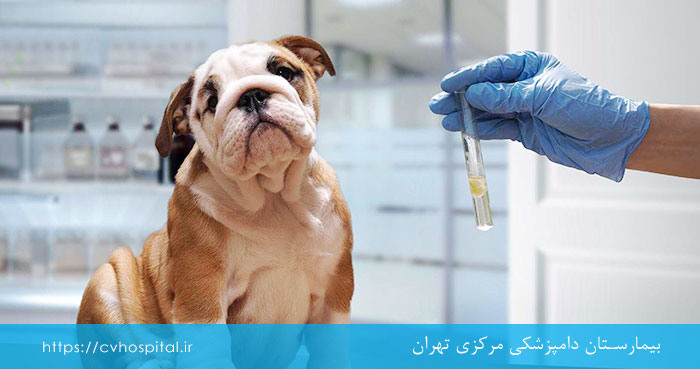
Diagnosis of Ehrlichiosis
In addition to assessing clinical signs, the following methods can be used for accurate diagnosis:
- Smear or cytology from blood or bone marrow Samples are taken from blood or directly from the bone marrow. Since the bacteria attack the bone marrow and suppress all blood cell lines, it may be possible to identify the pathogen through microscopic observation.
- PCR test from blood This method allows the identification of the bacterial genome and provides a definitive diagnosis.
Treatment of Ehrlichiosis in Dogs
Various treatments have been suggested for this disease, but the most effective and comprehensive treatment for canine Ehrlichiosis falls under the tetracycline antibiotics. The leading drug in this group is doxycycline, which is administered at a dose of 10 every 24 hours. This medication typically improves clinical signs within the first 24 to 48 hours.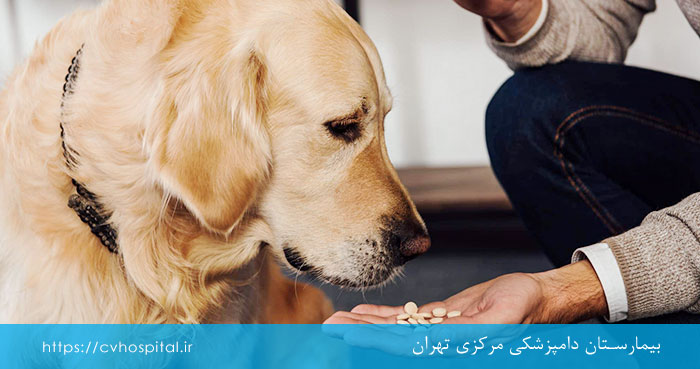
Treating Ehrlichia in dogs with medication In cases where blood cell lines have severely decreased, cancer medications are used:
- Eltrombopag: for platelets
- Filgrastim: to increase white blood cells
- Prednisolone (corticosteroid): to suppress the immune system in severe anemia stages
If there is a significant decrease in red blood cells or platelets, blood transfusions or frozen plasma may be necessary. Fortunately, the necessary medications and facilities for transfusion are available, and in many cases, the animal can be saved. However, if the disease has entered a chronic phase and all three blood lines have been severely reduced, even blood transfusions may not save the animal.

A dog infected with Ehrlichiosis and its care One point to note is that in Ehrlichiosis, the destruction of red blood cells is typically not due to hemolysis or autoimmune destruction. Thus, jaundice is not a common symptom of this disease, and red blood cells are not produced due to bone marrow suppression or are lost through bleeding. If there is an increase in bilirubin, it may indicate the presence of other concurrent diseases such as Babesia, which, unlike Ehrlichia, can cause hemolysis and jaundice.
The Importance of Early Diagnosis and Prevention Strategies for Ehrlichiosis
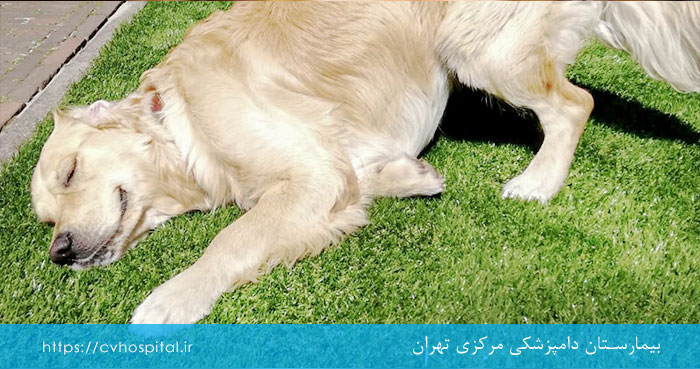
Many diseases can appear complex, misleading, and with vague symptoms. Therefore, diagnosing the disease is not limited to the clinic environment and the presence of a veterinarian. In fact, your pet is under your direct observation at home under normal circumstances. This means that as a pet owner, you are the first to notice behavioral changes, lethargy, or early signs of illness. In many cases, mild diarrhea or lethargy may go unnoticed without consulting a veterinarian and may even resolve on its own. However, this initial stage, if related to a serious illness like canine Ehrlichiosis and ignored, can gradually enter a subclinical (hidden) stage and suddenly present in a chronic and dangerous manner. In this case, the animal may lie lethargically (listless and unresponsive), suffer from severe anemia, or even show neurological signs. At this point, visiting the veterinarian may be too late, and little can be done.  Ways to prevent tick bites that transmit Ehrlichia Unfortunately, as of this writing, there are no approved vaccines for canine Ehrlichiosis. Therefore, the best and indeed only way to prevent the disease is to prevent the animal from being infested with ticks; as ticks are the primary transmitters of this disease. According to research, just one tick infected with Ehrlichia is enough to transmit the disease within three hours of being on the animal’s body. We have all seen that dogs love to play in the grass when walking in parks. They run, roll around, and are very happy, and we enjoy seeing their joy. But this is where the hidden danger begins. Ticks and fleas primarily enter the park environment from infected dogs and wait on the grass and plants for the next animals. This means that your dog may have no direct contact with an infected dog but could still be at risk by walking on the same grass where an infected dog previously played.
Methods for Combating Fleas and Ticks
Various methods are available to prevent flea and tick infestations:
- Flea and tick collars
- Flea and tick sprays
- Flea and tick drops
However, based on veterinary experience and scientific reports, these methods are not always 100% effective. You may have experienced that despite using a collar and spray, your pet still suffers from fleas or ticks. The reason is that many of these products have limited effectiveness and their impact decreases depending on how much time the animal spends in the infested environment. 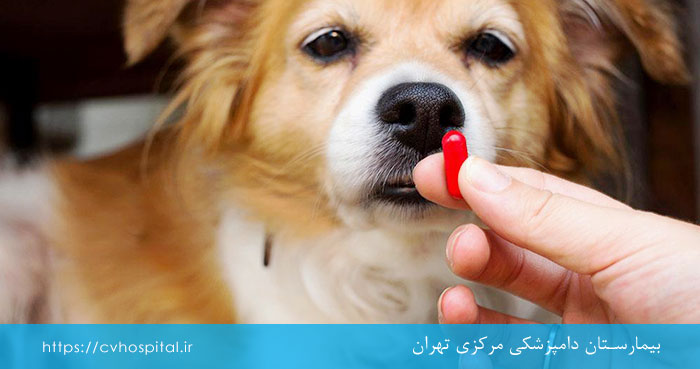 Pills for treating and preventing Ehrlichiosis in dogs
Introduction of an Effective and Modern Medication for Prevention and Treatment: Bravecto
Recently, a medication called Bravecto has entered Iran, which has been used in advanced countries for years. This medication is in pill form and is adjusted based on the animal’s body weight (for example, for dogs under 5 kg, between 5-10 kg, etc.).
Mechanism of Action of Bravecto
- Prevention: By administering this pill, the animal’s body is 100% protected against fleas and ticks for the first three months.
- Treatment: If the animal currently has fleas or ticks, Bravecto will also treat it.
- Gradual Effectiveness: In the second month, effectiveness reaches about 80%, in the third month about 60%, and in the last month about 40%. Usually, prevention can be observed for up to a year, but for precaution, it is better to use it every 6 months.
Best Time to Administer Bravecto for Dogs
The best time to use the Bravecto pill is early spring when flea and tick activity increases. However, due to climate changes and warming in many areas, in some regions, tick infestations can occur even in autumn and winter. If you often take your pet to green spaces, parks, or gardens, it’s best to schedule the use of this pill to ensure maximum protection during high-risk seasons.
Main Advantage of the Bravecto Pill
Treatment and protection against parasites in dogs (all external parasites) including:
- Fleas and ticks
- Mites
- lice
Conclusion
The disease ehrlichiosis in dogs is one of those diseases that, if ignored in its early stages, may threaten the animal’s life in advanced stages. So, if you care about your pet’s health, you should take the issue of tick prevention seriously, especially with effective medications like Bravecto, which is both a treatment and a protector. If you see a tick on your dog’s body, remove it as quickly as possible and contact our colleagues at the central hospital. If the dog shows suspicious symptoms (is lethargic, vomiting, or has diarrhea), be sure to take it to the hospital. Our colleagues will initiate diagnosis and care for the dog as soon as possible to treat the disease in its early stages and prevent any threat to the animal’s life.
Frequently Asked Questions
How is ehrlichiosis transmitted to dogs? The disease ehrlichiosis is transmitted by ticks, which introduce this bacteria into the dog’s body through their saliva.
How is ehrlichiosis treated in dogs? Ehrlichiosis is treated with tetracycline antibiotics like doxycycline. In more severe cases, supportive treatments such as blood transfusions and frozen plasma may be needed.
Is there a vaccine for ehrlichiosis? Currently, there is no vaccine produced for Ehrlichia in dogs. The best prevention method for this disease is to prevent dogs from coming into contact with ticks.
Can ehrlichia be transmitted from dogs to humans? This disease is only transmitted through a tick bite. Therefore, it is not directly transmitted from dogs to humans; however, infected dogs are a warning of the presence of Ehrlichia-carrying ticks in the area.
Can a dog infected with ehrlichiosis survive? Yes, if treated promptly and correctly with antibiotics, ehrlichiosis is treatable.