


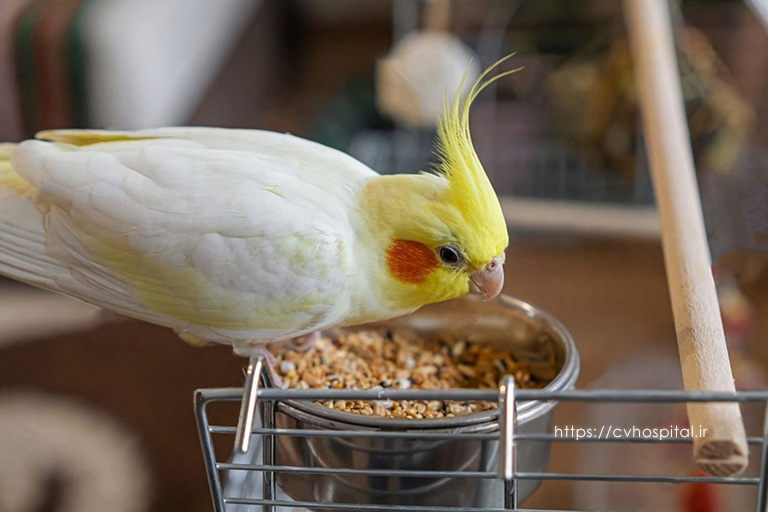


Proper and balanced nutrition is the cornerstone of the health, vitality, and longevity of a cockatiel (also known as budgerigar). These beautiful and lovable birds, whose popularity as pets is increasing day by day, require a diet that provides all the essential nutrients to maintain health and prevent diseases. Multiple searches for the phrase “cockatiel food” indicate the concern and importance of this issue for the owners of these birds. Therefore, providing a comprehensive and scientific guide in this field can be helpful.
Diet Plan for Cockatiels from Chick to Adult
The nutritional needs of a cockatiel change throughout its life. From chick to maturity and even into old age, the diet must be adjusted according to the bird’s life stage. During the chick stage, cockatiels need to be fed a special formula that is provided by their parents or manually by the bird’s owner.
Feeding Cockatiel Chicks up to Two Months
In the first two months of life, the cockatiel chick is very sensitive and its digestive system is not fully developed. In this period, soft and fully mashed foods should be used. A mixture of boiled egg yolk, a little plain biscuit, and chickpea flour can serve as a complete and nutritious food for these chicks.
What food should be given to a cockatiel? If the chick is being hand-fed, about 10 cc of this food should be given to it each time with a special syringe. Additionally, it is recommended to place soft seeds in the bird’s cage starting from the end of the first month so that it can learn to crack seeds. Gradually, as the second month begins, the soft food servings should decrease and the bird should slowly transition to a seed-based diet. Important Note:: Dairy products are harmful to chicks and should not be included in their diet. As time goes on and the chicks begin to eat solid food, solid foods are gradually incorporated into their diet. At this stage, providing sufficient nutrients for healthy growth and development is vital. Young birds need more energy and protein for the growth of their bones and body tissues. Even in cases where the bird is sick and has lost its appetite, providing easily digestible foods like porridge or baby food can help maintain its energy. This indicates that in specific conditions, such as at a young age or illness, considering the digestibility of food also becomes important. As the bird reaches maturity, its nutritional needs become somewhat stabilized, but maintaining a diverse and balanced diet remains essential for the health and vitality of the bird. In old age or if the bird has become less active, there may be a need to adjust the calorie intake to prevent obesity.
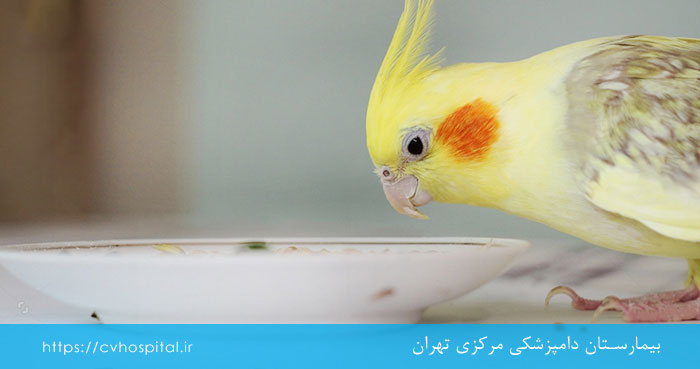
What is the best food for a cockatiel?
Your cockatiel’s diet should consist of 50 to 80 percent cockatiel pellets, 10 percent nuts and seeds, and 10 to 40 percent vegetables. This ratio is recommended due to calorie density. Calorie density refers to the number of calories in a certain amount of food. On average, pellets contain about 35 calories per 10 grams.
- Sunflower seeds: 58 calories per 10 grams.
- Pumpkin seeds: 45 calories per 10 grams.
- Walnuts: 65 calories per 10 grams.
- Almonds: 57 calories per 10 grams.
- Spinach: 2 calories per 10 grams.
- Broccoli: 3 calories per 10 grams.
- Corn: 9 calories per 10 grams.
- Carrots: 4 calories per 10 grams.
As you can see, nuts and seeds have a very high calorie content. If a cockatiel only eats pumpkin seeds, it will consume 68 calories, which is more than double its daily requirement. Similarly, if a cockatiel only eats spinach, it will only receive 3 calories, which is just 10% of its daily requirement.
Sample Weekly Diet Plan for Cockatiels
Having a weekly diet plan can help cockatiel owners ensure variety and balance in their bird’s diet. A sample weekly diet plan might include the following:
| Day of the Week | Morning | Noon | Evening | Night |
|---|---|---|---|---|
| Saturday | Seed mix (millet, flaxseed, oatmeal) | Small apple pieces | Special cockatiel pellets | Leafy green vegetables (lettuce, spinach) |
| Sunday | Seed mix | Grated carrot | Pellets | A small amount of sunflower seeds |
| Monday | Seed mix | Cucumber | Pellets | Wheat sprouts |
| Tuesday | Seed mix | Banana (in small amounts) | Pellets | Parsley |
| Wednesday | Seed mix | Cooked zucchini | Pellets |
Mixed seeds
Thursday: Mixed seedsSmall pieces of pearPelletsCooked oatmeal (without sugar and salt)
Friday: Mixed seedsAlmond (one small piece)PelletsChopped colorful bell peppers
Diet for Cockatiels During Breeding Season
During the breeding season and preparation for egg laying, the nutritional needs of the bird change. The best food for cockatiels at this time is to use warm seeds such as canary seeds, dandelion seeds, and hemp seeds along with millet and flaxseed. To stimulate reproduction and prepare the female’s body, adding vegetables such as parsley, dill, lettuce, broccoli, and fruits like apples and peaches is highly recommended. It is also suggested to give vitamins A, D, E, and C in droplet form to the bird two weeks before laying eggs to enhance its overall health.
How to Feed a Cockatiel With Chicks?
Once breeding is successful and the chicks are born, the mother’s diet should be enriched. The basic diet for the cockatiel during this time should include millet (about 70%) and supplements such as hard-boiled eggs, sprouts (especially sprouted wheat), and sunflower seeds. Additionally, starting from the second week of the chicks’ birth, shredded fruits like apples and carrots can gradually be added to the mother’s diet.
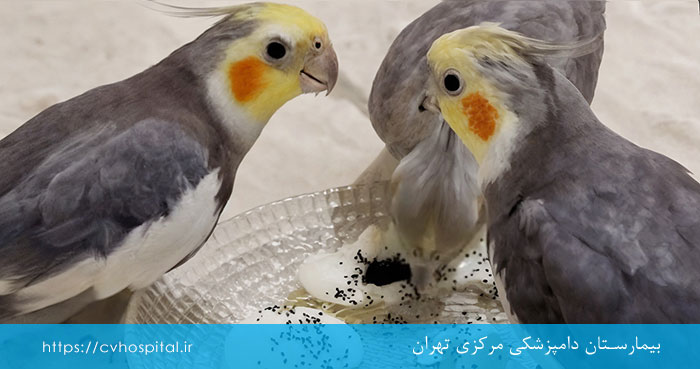
The Role of Dietary Supplements
While a balanced diet should provide all the nutrients needed for cockatiels, in some circumstances, using dietary supplements may be beneficial. For example, during molting, breeding, or illness, a bird’s need for certain nutrients may increase. Supplements such as calcium, vitamins, and probiotics may be prescribed by a veterinarian in specific conditions. However, it is very important to avoid giving any supplements to a bird without consulting your avian veterinarian. Excessive consumption of certain vitamins and minerals can be as harmful as their deficiencies. The veterinarian can determine whether there is a need for supplements by examining your bird’s health status and, if necessary, specify the proper dosage and type of supplement.
Forbidden Foods for Cockatiels
Being aware of foods that are toxic or harmful to cockatiels is just as important as knowing beneficial foods. Some common foods that are dangerous for cockatiels include: avocado, chocolate, onions, garlic, caffeine, alcohol, and foods high in salt or fat. These substances can harm the sensitive digestive system of cockatiels and lead to serious health issues or even death.
- For more information, click on the link Foods that cause bird poisoning.
For example, avocado contains a substance called persin that is toxic to many birds. Chocolate also contains theobromine, which can cause heart and neurological problems in birds. Onions and garlic can lead to anemia. Therefore, you must strictly avoid giving these foods and any processed or spicy foods to your cockatiel.
Suitable Foods for Each Season
The best food for cockatiels in each season is as follows:
| Season | Recommended Foods | Important Note |
|---|---|---|
| Spring | – Fresh vegetables (spinach, beet greens, romaine lettuce) – Sprouts (wheat sprouts, mung bean, lentils) – Low-sugar fruits like apples and pears – Nutricious seeds (flaxseed, millet) – Pellets specifically for birds | Use bird-specific multivitamins (as per veterinarian’s advice) |
| Summer | – Juicy fruits (seedless watermelon, cucumber, cantaloupe, tangerine) – Cool vegetables (zucchini, lettuce, broccoli) – Controlled amounts of seeds – Clean, fresh water | Avoid excessive consumption of sweet fruits like bananas and grapes |
| Autumn | – Cooked grains (brown rice, barley) – Nuts in moderation (walnuts, unsalted almonds) – Cooked vegetables like carrots, sweet potatoes, pumpkin – Mashed hard-boiled eggs (once a week) | Use mineral supplements with veterinarian’s consultation |
| Winter | – Nutricious seed mix (millet, flax, low sunflower seeds) – Hard-boiled eggs + unsalted dry bread – Warm and cooked vegetables (pumpkin, carrots) – Limited amounts of sweet fruits like bananas or dates (once a week) | High-calorie foods to provide the energy needed for the bird |
The Importance of Water in This Bird’s Diet
In addition to food, providing fresh and clean water continuously is of utmost importance for the health of cockatiels. Water is essential for hydration, digestion, and the proper functioning of all bodily systems. It is recommended to change the bird’s drinking water daily and to regularly clean the water dish to prevent the growth of bacteria and fungi. “`
In cases where the bird is sick and not eating, providing sufficient fluids becomes even more important. This indicates that dehydration can quickly worsen the condition of a sick bird. Signs of dehydration in a cockatiel may include lethargy, decreased appetite, and thick, pale droppings. Therefore, you should always ensure that your bird has access to fresh, clean water.
Dietary Solutions for Strengthening a Weak Cockatiel
If your cockatiel appears weak or ill, paying attention to its nutrition can play a significant role in improving its condition. In such cases, providing easily digestible and nutritious foods can be beneficial. Options like mashed ripe banana, apple puree, and rice baby food may be appealing and digestible for the sick bird.
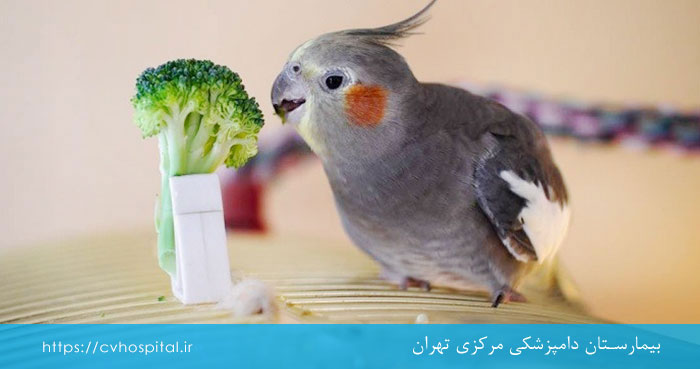
Baby food for cockatiels Also, ensuring the bird has access to enough water is very important. However, it should be noted that you should not forcibly feed the bird, as this can lead to increased stress and even aspiration (food entering the lungs). If you notice weakness or illness in your cockatiel, it is essential to consult a veterinarian specialized in birds for a proper diagnosis and specific nutritional advice. Depending on the bird’s condition, the veterinarian may recommend the use of dietary supplements or specific feeding methods, such as syringe feeding.
Appropriate Treats for This Parrot
Cockatiels are intelligent and social parrots that require delicious and varied treats for training, entertainment, and strengthening their bond with humans. Knowing this bird’s favorite foods is key to establishing better communication with it. Some popular treats for cockatiels include:
- Sunflower seeds (in limited amounts)
- Flaxseed and hemp seeds
- Basil seeds or other aromatic plant seeds
- A mix of golden millet with energy seeds
- Raw almonds
- Chopped walnuts
- Pumpkin seeds
- Unsalted pistachios
- Seedless apple
- Chopped pear
- Strawberries and raspberries
- Pieces of banana or grapes
- Grated raw carrot
- Lettuce or cabbage leaves without cleaning agents
- Sliced cucumber
- Leafy greens like parsley
If you want to give your cockatiel treats, keep the following in mind:
- Always start with a small amount and observe the bird’s reaction.
- Use fresh and washed foods.
- Reward at the right time, such as after training or good behavior.
- Treats should not replace regular meals.
Summary
A balanced and varied diet is essential for maintaining the health and longevity of a cockatiel. Seeds, as the main food for cockatiels, should be complemented with quality pellets, fresh fruits and vegetables, and an appropriate amount of nuts. Paying attention to nutritional needs at different life stages, avoiding forbidden foods, and providing fresh, clean water are among the key points in properly feeding these beloved birds.
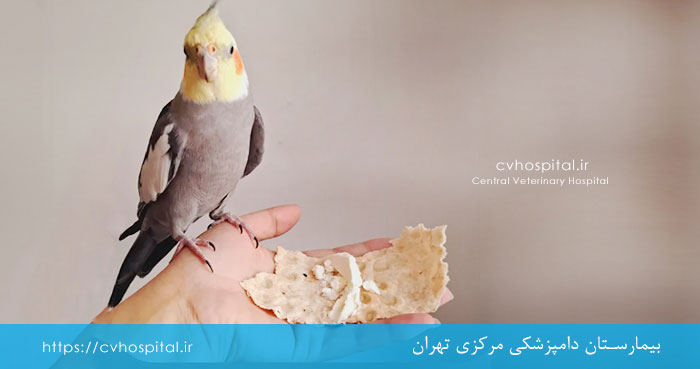
By following these guidelines and, if necessary, consulting with a veterinarian specialized in birds about cockatiel food, you can ensure that your bird experiences a long, healthy, and happy life. The nutrition clinic of the Central Veterinary Hospital is ready to provide consultation and offer a proper diet plan for your cockatiel to ensure peace of mind regarding its nutritional care.
Frequently Asked Questions
What is the most nutritious food for a cockatiel? A diverse and balanced diet that includes quality pellets, a variety of seeds (in appropriate amounts), fresh fruits and vegetables, and a small amount of nuts is the most nutritious option for a cockatiel.
What should I feed a cockatiel in winter? In winter, the cockatiel’s diet should also be diverse and balanced. There may be a need to slightly increase caloric intake to provide more energy during this season.
What is the cockatiel’s diet in summer? In summer, ensuring continuous access to fresh, cool water is even more crucial. You can add more juicy fruits and vegetables to the diet.
What should a two-month-old cockatiel eat? A two-month-old cockatiel is typically in the transition phase from being fed formula to solid foods. At this age, it is advisable to use soft and small seeds, fine pellets, and pureed fruits and vegetables.
How should a weekly feeding schedule for a cockatiel look from Saturday to Friday? A sample weekly feeding schedule is provided in a table within the article that can be used as a guide.
What is a suitable diet for strengthening a weak cockatiel? To strengthen a weak cockatiel, providing easily digestible and nutritious foods such as mashed banana, apple puree, and consulting a veterinarian is recommended.