




Struvite crystals are one of the most common types of crystals in canines and felines. These crystals, composed of ammonium, phosphate, and magnesium, can cause serious problems for pets. In this article, we will examine the factors contributing to their formation, clinical signs, diagnostic methods, and treatment of struvite crystals in pets.
Factors Contributing to Struvite Crystal Formation
Several factors are involved in the formation of struvite crystals, including crystal type, age, breed, and diet.

Type and Composition of Crystals
Struvite crystals are composed of compounds such as ammonium, phosphate, and magnesium. These crystals tend to form more in alkaline environments and can grow rapidly. In canines, these crystals are usually associated with bacterial infections. In contrast, in felines, these crystals can form even in healthy cats.
Aging and Breeding Effects
In cats, the formation of struvite crystals is more affected by age, breed, gender, and diet. Generally, struvite crystals are more commonly observed in females than in males. Certain breeds may also be more predisposed to forming these crystals.
Diet
The diet of pets plays a crucial role in the formation of struvite crystals. Foods high in magnesium and phosphate can increase the risk of forming these crystals. Additionally, foods that raise the pH of urine can contribute to the formation of these crystals.
Clinical Signs of Struvite Crystals
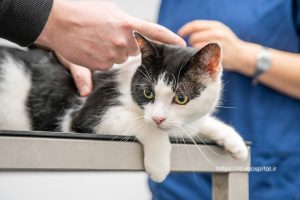
Hematuria (presence of blood in urine): One of the common signs of struvite crystals in animals is the presence of blood in urine or hematuria. This sign indicates damage to the bladder walls and urinary system, which can be very painful. Pain and burning during urination: Animals affected by struvite crystals typically experience pain and burning when urinating. These symptoms may cause animals to be reluctant to urinate, leading to more serious issues.  Struvite Crystals in Cats
Diagnostic Methods for Struvite Crystals
- Paraclinical methods: Paraclinical methods, including urine and blood tests, pH urine analysis, and mineral content analysis in urine, are used to diagnose struvite crystals.
- Imaging: Imaging methods such as radiography and ultrasonography in dogs and cats can be useful for detecting the presence, location, and quantity of crystals. These methods help veterinarians obtain an accurate image of the animal’s urinary system status.
- Microscopic examination: A urine sample from the animal is examined under a microscope to directly observe struvite crystals. This method allows veterinarians to identify the type and size of the crystals and initiate appropriate treatment.

Treatment Methods for Struvite Crystals in Dogs and Cats
- Drug treatment: Drug treatment includes the use of antibiotics for treating bacterial infections and medications to reduce pH of the urine. These drugs help reduce the formation of crystals and improve the animal’s condition.
- Dietary modification: Since diet plays an important role in the formation of struvite crystals, modifying the pet’s diet is essential. Veterinarians may recommend specific diets that contain lower amounts of magnesium and phosphate and maintain urine pH within an appropriate range.
- Prevention of recurrent crystal formation: Preventing the recurrence of struvite crystals involves regular care, periodic urine checks, and continuous dietary adjustments for the animal.
Conclusion
Struvite crystals can cause serious problems for pets, but with timely diagnosis and appropriate treatment, these issues can be managed. The most crucial point in managing this issue is paying attention to diet and regular health care. By collaborating with your veterinarian and following their recommendations, you can prevent the formation of struvite crystals and maintain the health of your pets. Our colleagues in the laboratory section of the Central Veterinary Hospital conduct all diagnostic tests related to the urinary system and will refer the animal to the internal medicine department if any suspicious case is observed for necessary treatment.