




Feather plucking is one of the most common issues that disrupts the beautiful appearance of a bird. In these situations, it is completely natural for bird owners to complain about this matter. However, an important point to consider here is that this incorrect behavior is a sign of a problem that has been ignored. For various reasons, birds engage in self-mutilation and pluck their feathers; it is our responsibility to identify the root of this incorrect behavior before it is too late. In this article, the team of specialists at the Central Veterinary Hospital has pointed out some important notes. To learn more about feather plucking behavior and its causes, stay with us until the end of the article.
Which Birds Are More Likely to Exhibit Feather Plucking Disorder?
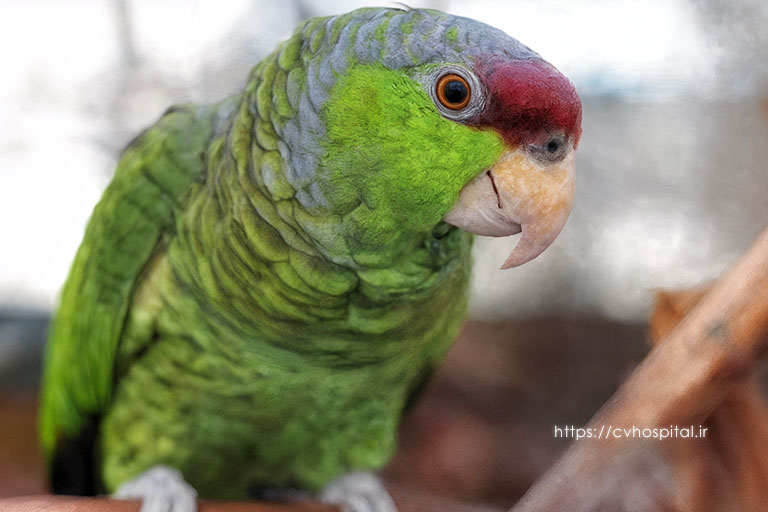
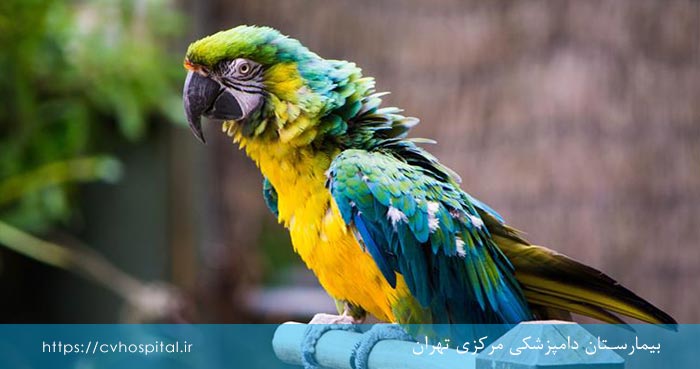
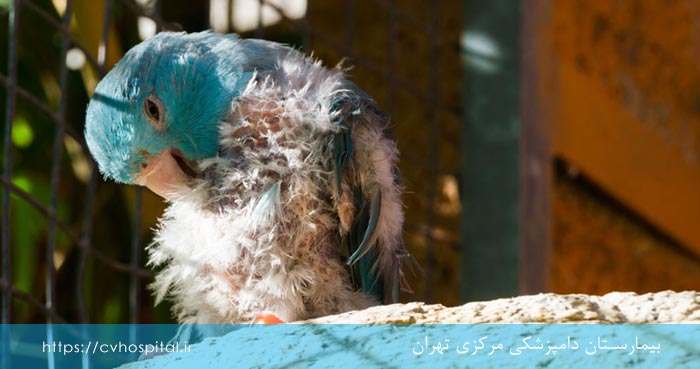
Feather plucking is a type of behavioral disorder that is more commonly seen in pet birds. In this disorder, a bird may peck and chew its feathers with its beak. In some cases, in addition to plucking feathers, they may also cause damage to their skin. Usually, the feathers in the areas under the wings, tail, sides, chest, neck, and inside the thighs are more exposed to this damage than other parts. In some instances, it has also been observed that a bird suffering from this disorder removes all of its feathers except for areas it cannot access. If the feather plucking behavior continues, in addition to negatively impacting the bird’s beauty, the skin and feather covering can sustain serious damage. Feather plucking is not limited to a specific type of bird; however, it is more common in parrots and cockatoos. Abnormal feather plucking behavior indicates a fundamental problem; therefore, measures must be taken to treat it to prevent the situation from worsening and causing serious harm to the bird.
Factors Influencing Feather Plucking in Pet Birds
Various factors play a role in feather plucking disorders. To treat this incorrect behavior, it is essential to first identify the cause of feather plucking. If the factor causing feather plucking in the bird is not identified, the incorrect behavior may continue and turn into a lifelong problem. Let’s examine these factors together below:
1. Improper Nutrition
Malnutrition is often observed in many pet birds. To address this problem, we recommend purchasing prepared and packaged foods specifically for birds from pet stores. Packaged foods contain various nutrients that can meet the bird’s body needs. Relying solely on one type of food, like seeds, not only fails to meet the physical needs of birds but can also lead to various illnesses in the long run. It is important to ensure that healthy and vitamin-rich nutrition is provided to the bird under the supervision of a veterinarian. You can request the best bird feeding program from the specialists at the Central Veterinary Hospital in this regard.
2. Jealousy in Birds as a Factor for Self-Mutilation or Feather Plucking
If you keep a parrot, you need to take the issue of jealousy in animals more seriously. Parrots are among the birds that will start plucking their feathers if they feel neglected or ignored. We recommend that if you also keep another animal alongside the bird, you should ensure you give equal attention to both pets.
3. Lack of Rest
On average, birds need 12 hours of rest per day. However, it is better to discuss the sleep and rest needs of your bird with a veterinarian. Each bird can have different requirements based on various factors, and veterinarians are aware of this. If the bird does not have enough rest time or does not enjoy quality sleep, it is completely natural for it to exhibit different reactions. One of these behaviors could be feather plucking or self-mutilation. Create a dark environment for the birds to rest. During their night rest and sleep, cover their cage with a cloth so they feel secure.
4. Various Diseases
Feather plucking in animals is not always related to environmental conditions. Sometimes, feather plucking in birds is due to internal diseases. It is necessary to visit a veterinarian to understand this issue, so that through various tests, the root of this incorrect behavior in the animal can be identified. Following the treatment steps for the disease will resolve the feather plucking issue in the bird.
5. Radio Waves
For some birds, not only do loud sounds from the radio or television lack attraction, but they may also be unpleasant. Additionally, birds like parrots are sensitive to radio waves, and exposure to such waves puts their health at risk. If you keep a bird at home, you need to pay attention to these matters. Radio waves can induce depression in parrots and lead to psychological disorders in the long run. This psychological disorder may manifest as feather plucking.

6. Change of Bird Caretaker
Just like humans, birds can become attached to a particular person or place. If you have recently acquired a bird, you may observe feather plucking behavior in it. This behavior could be the bird’s reaction to its new environment. To resolve this issue, it is necessary to take appropriate actions to help the bird adapt quickly to you and its new life.
Other Factors That May Cause Feather Plucking in Birds
In the previous sections of the article, we examined the most common factors that lead to feather plucking behavior in birds. Other reasons for this behavioral disorder can also be identified. Bird owners need to pay attention to all these factors to prevent, diagnose, and treat feather plucking. These factors can be summarized as follows:
- Excessive heat
- Change of the bird’s living environment
- Allergy to various materials
- Air pollution and dust
- Suppression of sexual activity in birds
- Low environmental humidity
- Hormonal changes
- Busy environment
- Lack of access to sunlight
- Heavy metal poisoning
Final Words
Feather plucking is a behavioral problem in pet birds. This disorder occurs more in birds that live in cages. In this article, we discussed the factors that lead to this behavior. In conclusion, it is important to remember that if your little friend is starting to pluck their feathers, this behavior should be addressed before conditions worsen. For more information and to assess your bird’s condition, you can consult with specialists at the Central Hospital in Tehran.