



Maintaining hygiene is important for every living being. Small animals like birds also regularly wash themselves to sustain life and protect themselves against various diseases and germs. One of the frequently asked questions regarding the care of ornamental birds is how to bathe them. There are different methods for bathing birds. In this article, we will first introduce you to the bathing methods for birds and then discuss important tips that are essential for maintaining the health of these lovely creatures. Join us to find the answers to your questions in this field.
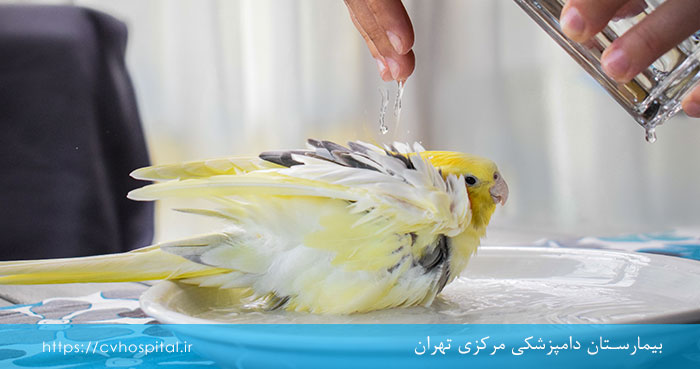
Methods for bathing birds
Just as birds do not have a common type of food, their bathing methods can also differ from one another. Some birds enjoy being sprayed with water, while the same method may stress another bird. As someone responsible for the care of a bird, it is important to know the appropriate bathing method for your bird. If you lack sufficient information in this area, you can consult breeders or veterinarians. In the following sections, we will explain the methods for bathing birds.
Spraying
Spraying water on birds is a popular method for cleaning them. Spraying water evokes the feeling of being in the rain for the bird. Hold the nozzle of the spray upwards to wet the bird’s body with droplets like rain. When bathing birds, there is no need for them to be rinsed; continue this method until a layer of water is on their body.
Submerging in water
Some birds like to immerse themselves in water. To fulfill this need of your bird and create the ideal bathing conditions for them, use your kitchen sink. Keep some warm water in the sink and then place the bird in it.
There is a chance that your beautiful little bird will learn its natural bathing instinct there and will splash water around in no time. However, it is important to pay attention to the water level and not let the bird get completely soaked. In another scenario, the bird may feel more secure bathing in your hands. You can assist them in bathing to avoid creating stress.
Using moist leaves
Another simple method recommended for bathing small birds is using moist leaves. Birds with smaller body sizes enjoy rolling around on wet leaves. If you have a small bird, try this method. Soak Swiss chard, lettuce, or other types of vegetable leaves and place them at the bottom of the bird’s cage. Alternatively, you can put the wet leaves in a shallow plate or bowl. If the bird responds positively to this method, it will splash water onto its feathers to keep itself clean and tidy.
Shared showering
Let’s not forget that birds are naturally social creatures. In an engaging method, you can invite your bird for a shared shower. Many birds enjoy this method and like to bathe with their owner. Various tools have also been designed for this purpose, and you can use special sprays. If you plan to introduce your little friend to showering, you will need to be patient. For example, before convincing your bird to shower like this, it’s better that it first watches you under the shower. You must convey the feeling to the bird that this friendly water play never threatens its safety.
How to dry a bird
What is much more important than bathing a bird is providing a heat source for the bird after bathing. Some people mistakenly use hairdryers to dry birds. Using a hairdryer is not suitable for birds and can cause significant harm to them. We recommend that you never use this method.
One of the best actions you can take in this regard is to use an IR lamp. This device is suggested not only for drying the bird’s feathers but also has therapeutic uses. If you do not have access to an IR lamp, you can use alternative devices. The warmth from a heater or devices like a radiator provides a milder heat that is more suitable for drying the bird after bathing.
After bathing, you may notice the bird shivering. Keep in mind that this movement does not mean they are cold; rather, it is a natural reaction they perform to generate heat. This movement helps in drying the bird’s feathers.
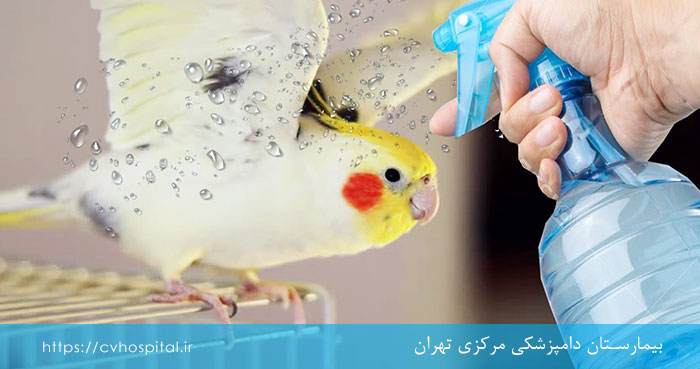 Teaching how to bathe birds at home
Important tips for bathing birds
There are various methods for bathing birds. What is important is to adhere to a few simple rules that should always be kept in mind when washing birds. When bathing birds, pay attention to the following tips:
Use clean water
There are various shampoos available in the market for washing birds. Remember that birds produce a type of oil that is essential for the health and vitality of their skin. Therefore, using shampoo or soap removes the beneficial oils from the bird’s skin. The loss of these oils can create many problems for the birds. The best and safest method for bathing…
Birds require clean and pure water.
Bathing Time for Birds
Birds are often sensitive to cold. Consider the warmest time of the day for bathing your bird. It is best to schedule this time before nightfall and the drop in temperature. The best time to wash birds is in the morning until noon. This timeframe provides a good opportunity for the bird’s feathers to dry in the open air.
Water Temperature
Always remember to check the water temperature. Hot or cold water can be harmful to birds. An imbalanced water temperature may cause burns, dry skin, or make them ill. In winter, due to the cold weather, bathe your bird with warmer water.
Preventing Complete Drenching of the Bird
Birds that live in nature do not allow their feathers to get completely soaked. Follow this simple rule as well. Complete soaking of a bird’s feathers can cause them to lose body heat and prevent them from flying. Except in special cases, be careful to prevent complete soaking of your bird’s feathers. Regardless of your bathing method, by observing this point, you can ensure that your method is completely safe and does not harm the bird.
Final Thoughts
Hygiene for birds, like any other pet, is essential, and we must take it seriously. One of the important issues concerning bird care is how to bathe them. In this article, we presented methods for bathing birds. We highlighted key points to pay attention to when washing birds. In conclusion, we would be happy if you also share any specific experiences you have related to bathing birds with us.