






Giardia in Cats: What Is It and What Are Its Symptoms? In brief, we should say that giardiasis is a disease common between humans and cats, and it is indeed an intestinal infection in humans and animals caused by a microscopic single-celled parasite called Giardia. This parasite is neither a worm, nor a bacterium, nor a virus—it’s a simple and parasitic single-celled organism. This parasite is found worldwide and is one of the common causes of “traveler’s diarrhea” in humans.
Giardia in Cats Under the Microscope
Giardia has two forms: an active and fragile form called trophozoite, which lives in the intestines of the infected animal, and a resistant and cystic form that is expelled in feces and can survive for several months in the environment, especially in water or damp places. Giardiasis can be a significant cause of diarrhea in humans and animals, although many cats are infected with this parasite without showing symptoms or their diarrhea is considered non-specific. Undoubtedly, the incidence of Giardia infections in cats is greater than what is typically diagnosed.
How Do Cats Get Infected with Giardia?
A cat becomes infected by ingesting the cysts of the Giardia lamblia parasite. Once in the intestines, the cysts convert into the active form, trophozoite, and attach to the intestinal wall to feed. If a large number of these parasites are present in the intestine, clinical symptoms begin to appear due to damage to the intestinal wall. Trophozoites multiply through cell division, and some convert again into cysts.
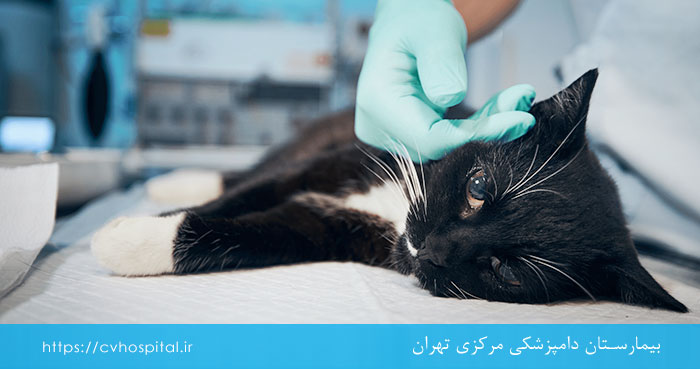
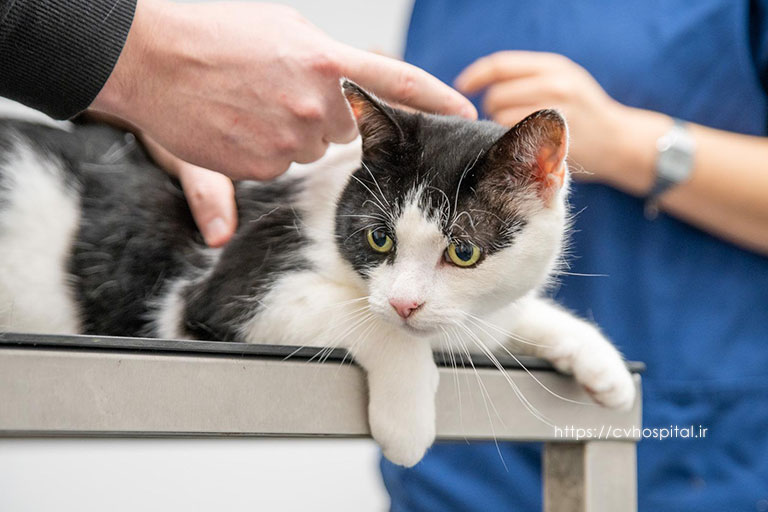
A cat infected with giardiasis Eventually, the cat expels the infectious cysts through feces. The duration from ingestion of the cyst to expulsion in feces takes about 5 to 16 days in cats. These cysts can immediately contaminate other animals upon expulsion. Transmission can occur through eating or sniffing contaminated soil or water. In healthy adult cats, this disease is relatively rare, but in situations where many cysts exist in the environment, the likelihood of infection increases. This disease is more common in kittens and weakened cats, and in crowded environments such as boarding facilities, pet shops, or shelters. Kittens tend to shed more cysts in their feces compared to adult cats.
What Are the Clinical Symptoms of Giardiasis in Cats?
These microscopic parasites attach to the intestinal wall, and their damage leads to severe diarrhea in cats that is sudden and foul-smelling. Infection with Giardia in cats may lead to weight loss, chronic and intermittent diarrhea, and greasy stools. Feces may range from soft to watery, have a greenish tint, and sometimes contain blood. The presence of a significant amount of mucus in the feces is also common. In some cases, vomiting may also be observed.
These symptoms may last for several weeks, with gradual weight loss occurring. Diarrhea may be intermittent. Fever is not typically seen, but the cat may appear lethargic. The disease is usually not life-threatening; however, Giardia can be more severe in kittens, older cats, and those with compromised immune systems (such as those infected with feline immunodeficiency virus or feline leukemia virus) . Many asymptomatic carrier cats never show any signs of illness. Kittens infected with Giardia show more clinical symptoms.
How Is Giardia Diagnosed in Cats?
A routine fecal float test may not be able to detect the small Giardia cysts that are irregularly expelled in feces; therefore, a specific solution called zinc sulfate is often needed. Sometimes, the parasites can be observed in a direct smear of feces. If the veterinarian suspects giardiasis, a fecal sample may be tested for specific Giardia antigens. Some tests can be performed in the clinic, while others must be sent to a reference laboratory. Many cases are also diagnosed solely based on clinical signs and medical history.
What Is the Treatment for Giardiasis in Cats?
Common medications for eliminating Giardia include fenbendazole (Panacur®) and metronidazole. These medications are typically very bitter, so they are produced as coated tablets. However, to prescribe the appropriate dose for the cat, the tablet may need to be broken, revealing the bitter taste. Veterinary pharmacies can prepare these medications in flavored formulations to make it easier for cats to consume. The treatment duration is usually 5 to 7 days. Fenbendazole and metronidazole may be used alone or in combination. The combination of these two medications is typically prescribed for cases resistant to initial treatment. In cases of severe diarrhea or dehydration, supportive treatment may also be necessary. The veterinarian will determine the appropriate treatment method based on the specific circumstances of the cat.
- Since Giardia cysts can immediately contaminate after expulsion, feces should be collected and disposed of quickly. Additionally, the animal’s body should be regularly washed to remove cysts from the fur.
What Is the Prognosis for Giardiasis?
The prognosis is good in most cases. Weak, older animals or those with immune deficiencies are at greater risk for severe complications or even death. All pets that have been infected with Giardia should be re-tested 2 to 4 weeks after the completion of treatment.
Can My Cat Transmit Giardia to Me or My Family?
Yes, giardiasis is the most common intestinal parasitic infection in humans and can potentially be transmitted from cats to humans. It was previously thought that cats, dogs, and wild animals were the primary sources of transmission to humans. Certain Giardia species (genotypes A and B) can infect humans, dogs, and cats. However,
Human-to-human transmission as well as contaminated urban water sources are also significant factors in the spread of disease. If your cat is infected with Giardia, disinfecting the environment and maintaining personal hygiene is crucial to prevent transmission to humans. Particularly for individuals with compromised immune systems, such as patients with AIDS, cancer, or those undergoing chemotherapy, it is essential to be very cautious when handling feces, cat litter, or medications. For disinfecting the environment, a bleach solution (e.g., Clorox) can be used in dilutions of 1 to 32 or 1 to 16 (equivalent to 1 to 2 cups per 4 liters of water). However, before use, make sure that the surfaces you intend to disinfect are not sensitive to bleach. Disinfectants such as Lysol® or quaternary ammonium compounds (like Parvosol®) are also effective in destroying cysts. Giardia cysts are sensitive to drying out, so keep the environment as dry as possible. For best results, first, thoroughly clean the living and sleeping areas of the animal, then allow them to dry for a few days before returning the animals.
Giardia at a Glance
Below is a summary of the main points of this article concerning the Giardia parasite in cats:
| Section | Summary |
|---|---|
| Definition of Giardia | Giardiasis is a common intestinal infection shared between humans and animals caused by the single-celled parasite Giardia. |
| Forms of the Parasite | This parasite has two forms: the active trophozoite in the intestine and the resistant cyst expelled in feces that remains alive in the environment. |
| Life Cycle | Upon ingestion of cysts by the cat, they transform into trophozoites in the intestine, and after multiplication, some revert to cysts and are expelled through feces. |
| Clinical Signs | Sudden, foul-smelling, or greasy diarrhea, weight loss, sometimes blood and mucus in feces, and lethargy; these symptoms are more common and severe in kittens. |
| Diagnostic Methods | Fecal floatation with zinc sulfate, direct smear, or Giardia-specific antigen testing in clinics or laboratories. |
| Treatment | Fenbendazole or metronidazole for 5–7 days; a combination for resistant cases and supportive treatment in cases of dehydration. |
| Prognosis | Usually good; weak or immunocompromised cats are at greater risk. Retesting 2–4 weeks after treatment is recommended. |
| Transmission to Humans | Giardia can be transmitted from cats to humans; practicing hygiene, promptly collecting feces, and disinfecting the environment are essential. |
| Prevention and Disinfection | Regular washing of the cat’s body, immediate feces collection, and disinfection with bleach or quaternary ammonium compounds; keeping the environment dry. |
🔹🔹🔹🔹
Cat giardiasis is controllable if diagnosed and treated promptly. Therefore, if you observe any of the symptoms mentioned in the article, take the animal to the Central Veterinary Hospital in Tehran for examination, testing, and initiation of giardiasis treatment by our colleagues in the internal medicine and laboratory.
Frequently Asked Questions
Can Giardia be transmitted from cats to humans? Yes, in some cases, Giardia can be transmitted from cats to humans, especially if the type of parasite (genotype or assemblage) is one that also causes disease in humans (such as genotype A or B). Direct transmission from cats to humans is less common, and most human cases occur due to contaminated water consumption. Personal hygiene, thoroughly washing hands after contact with feces or cat litter, and keeping the environment clean are very essential; particularly for those with weakened immune systems, like patients with cancer or AIDS.
What are the symptoms of Giardia in cats and how is it diagnosed? The main symptom of Giardia in cats is foul-smelling, greasy diarrhea, which may sometimes be greenish, possibly accompanied by weight loss, lethargy, and, in some cases, vomiting. These symptoms may appear chronically or intermittently. Diagnosis is usually done through fecal testing, but since the parasite cyst is not always present in the feces, more specific tests such as Giardia antigen testing or multi-stage tests may be needed.
Is treatment for Giardia in cats effective and how is it done? Yes, Giardia treatment is typically successful.
What is the best medication for treating Giardia in cats? Medications such as fenbendazole (Fenbendazole) or metronidazole (Metronidazole) are used for treatment, usually administered orally for 5 to 7 days. In resistant or severe cases, a combination of these two medications may also be used. Additionally, maintaining environmental hygiene, regular washing of the cat, and disinfecting the living area with disinfectants like bleach or quaternary ammonium compounds is essential to prevent reinfection.
Source: vcahospitals