







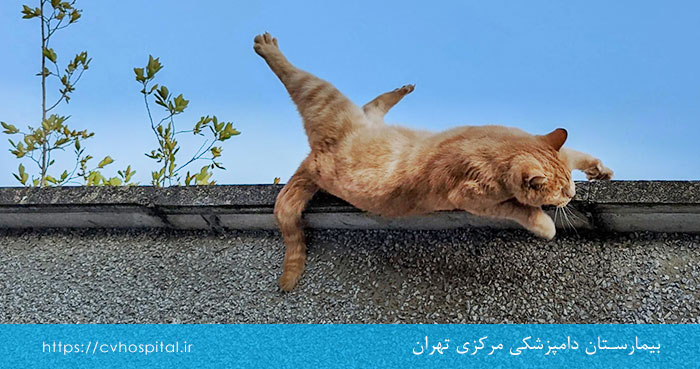
The phenomenon of a cat falling from a height is quite common, and the reason is that cats do not accurately assess the distance and height. This event occurs while fleeing, moving along the edges of walls and ledges, and during bird hunting. The severity varies from low to high, depending on the height, the animal’s ability to control its fall, and the manner of landing, and it can even be fatal as the animal may lose its life on impact due to the severity of the shock. Therefore, when faced with a cat’s fall, first and foremost, maintain your composure and then carefully lift the cat and take it to the nearest treatment center so that necessary medical interventions can be performed immediately.
What Symptoms Should You Watch For?
If you see your cat falling, observe it closely for a few days. Because some injuries manifest immediately while others may not become apparent until several hours or days after the fall. Even if you did not see your pet falling, you should suspect a fall if you observe any of the following symptoms:
- Reluctance to stand or walk
- Pain when lying down or getting up
- Stiff walking
- Lameness
- Breathing difficulties
- Whining
- Lethargy
- Decreased appetite or difficulty eating
Effects of Cat Falling from Height
Bone Fractures: Fractures of the limbs, especially the legs, pelvis, and spine, are among the common injuries. In some cases, fractures of the jaw and teeth are also observed.
Internal Injuries: Diaphragmatic rupture, internal bleeding, and damage to internal organs such as the lungs, liver, and bladder may occur. These injuries can lead to respiratory problems and pose a threat to the cat’s life.
Head and Facial Injuries: Head trauma, skull fractures, and injuries to the eyes are other possible complications.
Spinal Column and Spinal Cord Injury: Fractures or injuries to the vertebrae can lead to partial or total paralysis.
Shock and Trauma: A fall can lead to shock and trauma in the cat, which requires immediate veterinary care.

Necessary Actions After a Cat Falls from Height
Medical interventions include checking for symptoms of internal bleeding in the cat, assessing the nose, lungs, blood vessels, and abdomen. Diagnostic procedures also involve X-rays, blood tests, FAST ultrasound to assess abdominal fluid levels and identify the nature of the fluid, checking for bleeding in vital organs such as the lungs, spleen, and liver, diaphragmatic rupture, respiratory distress, and skin wounds and lacerations. If the animal requires surgery, its condition will be stabilized first, and then surgery may be performed one or two days later. Hence, serious injuries resulting from a fall should be evaluated and treated immediately by a veterinarian. However, there are also first aid measures that you can perform at home, which include:
1. Monitoring the Cat’s Breathing
If your cat has difficulty breathing, take it to the nearest emergency hospital immediately. Remember that cats typically breathe through their noses, so wheezing is a sign of respiratory distress. Transporting cats with breathing difficulties should be done very carefully, especially if ribs are broken. Gently place the cat in a pet carrier (remove the top of the carrier and place the cat inside). If you do not have a pet carrier, use a flat, hard object. Cats with broken ribs must remain very still to prevent lung puncture, so do not let it struggle. If it prefers to lie down or sit, allow it to do so. Signs of diaphragmatic rupture in cats include:
- Shortness of breath
- Abnormal lung sounds
- Exercise intolerance
- Lethargy
- Pale mucous membranes
- Pain
- Neurological disturbances or lack of balance (occasionally)
 Cat jumping
2. Caring for Open Wounds
It is very important to cover a wound with a broken bone protruding from it. Bone infection can seriously hinder the healing process. Puncture wounds on the abdomen must also be covered to minimize infection from external contaminants. However, if the intestine is perforated, infection can start from within. Your veterinarian will assess this issue.
3. Controlling Bleeding
If a wound is bleeding, wrap a towel tightly around the injured area and apply gentle but firm pressure. If the towel becomes wet, remove it and place another towel on top. Most bleeding stops within 5-10 minutes. However, for cats with bleeding disorders, it may take longer. If the spleen or liver is damaged, excessive bleeding may occur.
4. Checking for signs of concussion in cats
Be aware of signs of brain injuries in cats. The presence of blood in the eyes, nose, or mouth indicates possible head injury. Cats often swallow blood that collects in the mouth and lick blood that flows from the nose, so there is no need to check for bleeding. Only rush the cat to a treatment center for concussion treatment.
5. Checking for back injuries
A cat that cannot get up at all may have a back injury and should be kept as still as possible. Gently place your cat on a firm object. Cover it with a blanket and take it to a veterinary emergency clinic.
6. Monitoring the cat for a few days
Sometimes, cats may appear normal after falling while walking around and playing, but later become lethargic and weak, or have breathing difficulties, so it is important to closely monitor them for a few days after the fall. Delayed injuries include lung collapse from punctured broken ribs or hernias that start as small openings and later tear. A diaphragmatic hernia occurs when a tear in the wall separating the chest from the abdomen happens. If abdominal organs (liver, stomach, intestines) move into the chest cavity, breathing becomes compromised. A hernia may also occur in the abdominal wall, causing problems with the intestine, bladder, or other organs. These delayed problems are emergencies that require immediate attention. Note: Falling from a height can be fatal, and since the mortality rate is high in the first three days, the animal should be closely monitored during this period.
7. Monitoring eating and elimination
Jaw fractures often occur when cats fall. Be mindful of your cat’s eating and drinking. If it spills food, cries when chewing, or drools excessively, take it to the veterinarian. If it does not have a normal bowel movement within 48 hours or does not urinate within 24 hours, definitely seek help from a veterinarian. Your cat may have a ruptured bladder, or the bladder may be impacted by an abdominal hernia. Lack of normal urination and defecation can be a serious sign.

Falling into water
Cats naturally have the ability to swim, but most are reluctant to enter water. If a cat suddenly falls into water, it usually instinctively starts to swim to save itself. However, many cats feel insecure and anxious in water, which can lead to panic and frantic attempts to quickly exit the water. Reasons such as the heaviness of wet fur, drops in body temperature, and the loss of their natural body scent can cause distress for cats in water.
If a cat falls into water, it is important that the animal is quickly removed from the water and dried in a warm and calm environment to prevent hazards like hypothermia. Some cat breeds, such as Turkish Van and Maine Coon, are interested in water and may enjoy playing in it. However, even with these breeds, caution should be exercised and sufficient supervision should always be maintained. Gradually introducing a cat to water and using positive reinforcement can help reduce their fear and increase their comfort when facing water.

How to prevent cat falls?
Cats are naturally agile and it is not easy to prevent them from jumping onto furniture or sofas. Therefore, cat owners should always be prepared for unexpected situations. To prevent falls, limit the cat’s access to terraces, roofs, and high places.
Conclusion
Although cats typically land on their feet, they can still sustain injuries when falling. Thus, cat caregivers should be aware of the issues that may arise during a cat’s fall. Sprains, broken bones, head trauma, and injuries to the chest or abdomen can occur when cats fall. Because a cat may lose its life due to complications arising from a fall, diagnostic and treatment efforts should be entrusted to an experienced veterinary team. The internal department of the Central Veterinary Hospital is ready to take all necessary measures to save a cat’s life and significantly reduce the risk of death from a fall.
Frequently Asked Questions
How high can a cat jump?A cat can jump from a height of about 3 to 4 meters. A cat’s ability to jump from heights depends on its body structure, muscle strength, and the use of its balance and flexibility senses.
If a cat appears to be fine after a fall, does it still need a veterinary examination?
Yes; because there may be internal injuries or fractures that are not detectable without a specialized examination.