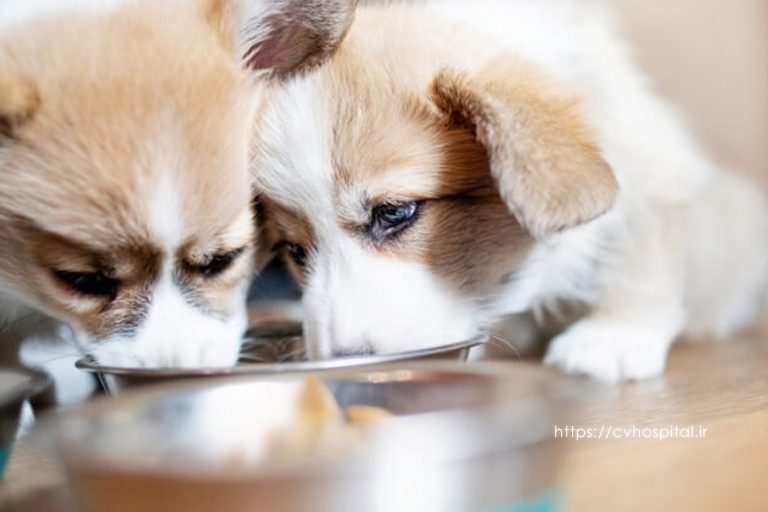

Puppy food should be determined based on their needs and physical conditions from birth to one year old. Puppies, regardless of gender, consume their mother’s milk from birth. However, the timing for weaning them and introducing wet, dry, and treat foods should follow their nutritional guidelines, which we will thoroughly discuss in this article.
What food to give a newborn puppy?
Newborn puppies start by feeding on their mother’s milk. Thus, the food for a one-day-old puppy is solely mother’s milk. Cow’s milk is used when the mother’s milk does not meet the puppy’s nutritional needs. The consumption of milk every two to three hours is essential for puppies. As they grow and reach three weeks of age, this frequency can be reduced. By four weeks to six months, the number of meals can change to three to four times a day, and with the complete introduction of solid food, they can receive two full meals throughout the day.
How long do puppies drink their mother’s milk?
Puppies should exclusively feed on their mother’s milk from birth until four weeks of age. The nutrients in milk can meet their nutritional needs and are adequate for the complete growth of their bones, muscles, and nervous system. However, consumption can extend to eight weeks old. 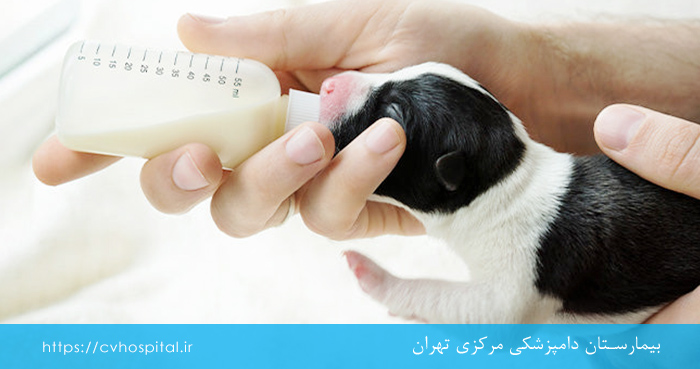
Food for motherless puppies
For puppies without a mother, powdered milk should be used as the main food. Like other puppies, motherless puppies should be fed milk until at least four weeks old. The only substitute for mother’s milk for a motherless puppy is special powdered milk for dogs. Cat powdered milk and cow’s milk are not recommended for puppies due to their high lactose content, which can lead to diarrhea and digestive issues. Feeding puppies should be done using a baby bottle. Thus, an appropriate amount of powdered milk should be mixed with boiled water according to the instructions on the powdered milk can and offered to the puppy with the bottle.
Is mother’s milk enough for puppies?
Puppies are only allowed to consume mother’s milk until they are eight weeks old; however, after this age, the amount of mother’s milk and the nutrients in it may not meet their growth needs, and they should start using soft and wet foods until they begin to teethe. After the teeth emerge, solid food takes precedence for them to receive the carbohydrates, calcium, and proteins necessary for completing their growth stages. 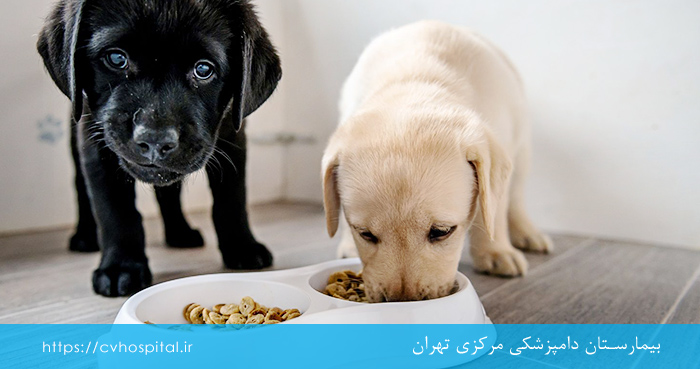
Wet food for puppies
After three weeks, puppies show a preference for both dry and wet foods, which should be noted by their caretakers. To start feeding, soft and wet foods should be offered to the puppy first. With the introduction of wet food, there is no need to stop milk, and it should be included as a supplement to the puppy’s main meal. At eight weeks, the puppy can be completely weaned from milk, and its only main food should be wet food. It’s important to note that weaning should not be abrupt but should occur gradually by reducing the amount of milk over time throughout the day.
Dry food for puppies
Given the importance of puppy food from birth to one year, caretakers should start solid food by assessing the development of their teeth. If the puppy’s teeth have grown, commercial solid food combined with wet food should be offered, and gradually, as the amount of wet food decreases, the solid food should become their primary food source. 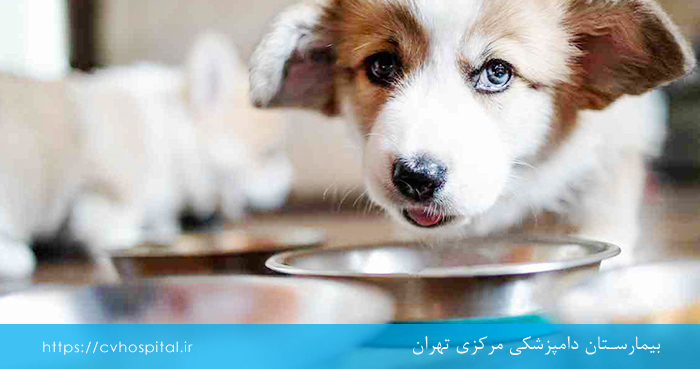
Differences in nutritional needs between male and female puppies
The best food for puppies is mother’s milk, followed by commercial wet foods. Puppy food from birth to one year old is determined based on breed as well as age and physical condition. However, the puppy’s gender has no impact on the type of food they consume.
Harmful foods for puppies
Dogs that start consuming soft foods alongside mother’s milk at two months old should avoid harmful household foods such as those containing spices and salt, dairy products, gum, chocolate, grapes, raisins, dough, avocado, etc., which can cause food allergies and poisoning.
Nutritious foods for puppies
Puppy food from birth to one year must contain nutrients such as protein, fat, carbohydrates, calcium, and minerals. The wet and dry foods included in the puppy’s main diet should be of a reinforcing type to support the complete growth of their nervous and muscular systems and to prevent them from developing common diseases at this age. Nutritious puppy food includes cooked rice, cooked meat, boiled eggs, and healthy oils like fish oil.
Required food quantity for puppies at different ages
The amount of food consumed, which can include milk and both wet and dry food, should be determined based on the weight and age of the puppy. Veterinarians can assess their physical condition, weight, and age to determine the amount of food for each meal in grams. Generally, the number of meals for puppies from birth to three weeks is 6 to 8 meals, and for puppies aged four weeks to six months, four meals are recommended. After six months, puppies can typically eat twice a day. 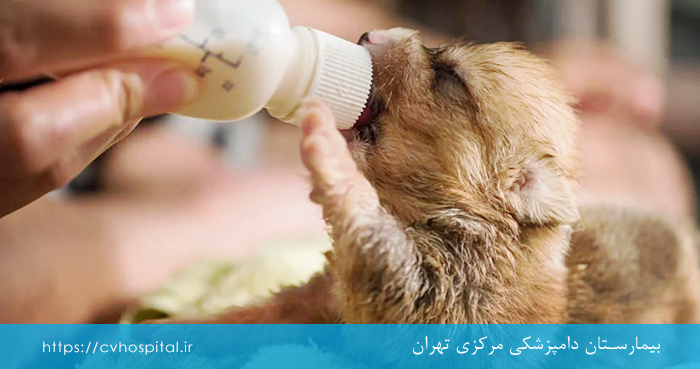
Appropriate food for puppies based on age
Puppies from birth to three weeks should be completely fed on mother’s milk or commercial puppy formula. From three weeks to eight weeks, they can consume both milk and wet foods. After eight weeks and complete weaning, they can consume both dry and wet food simultaneously, and once their teeth are fully grown, they can use commercial solid food.
- One-month-old puppy food: mother’s milk or puppy formula
- Two-month-old puppy food: mother’s milk, puppy formula along with wet food (preferably commercial)
- Three-month-old puppy food: wet food mixed with solid food
- Four months old and above: commercial and homemade solid food
Homemade food for puppies
For homemade food to be suitable, the puppy needs to have completed about eighty percent of its growth. The time for this growth varies due to the different breeds of dogs, as the breed difference makes age irrelevant in their growth stages. Typically, small breed dogs complete eighty percent of their growth by 10 to 12 months, medium-sized breeds by 12 to 15 months, and large breeds by 15 to 24 months. Homemade puppy food can include chicken, carrots, potatoes, rice, and vegetables that must be completely cooked without using oils, salt, or spices.
Treats for puppies
When using treats for puppies, it’s essential to consider their age and the type of meal they are having and choose between wet or dry treats accordingly. It’s worth noting that the treat amount should only constitute 10 percent of their daily food intake.
Final thoughts
Puppy food from birth to one year should be a combination of mother’s milk, soft food, and solid food, with the timing of each depending on their age, physical condition, and breed. After eight weeks, puppies can switch from mother’s milk or puppy formula to wet food, and once their teeth have fully grown, they can transition to commercial and homemade solid food.
Frequently asked questions
What food is suitable for stray puppies? Stray puppies up to three weeks old should be fed puppy formula or mother’s milk, and after four weeks, they can consume soft homemade foods like broth, cooked meat, boiled rice, and special puppy cans. What is the food for one-month-old puppies? The food for one-month-old puppies is only mother’s milk, which should be replaced with puppy formula if the mother is unavailable. What type of powdered milk should be given to puppies? Using human and cat powdered milk for puppies is prohibited; it must only be specialized for dogs. What type of homemade food is recommended for two-month-old puppies? Soft and wet foods containing rice, pasta, and cooked meat are considered suitable foods for puppies aged 40 days to two months. What food should be given to a 20-day-old puppy? At this age, puppies should only be fed mother’s milk or puppy formula. Source: chewy