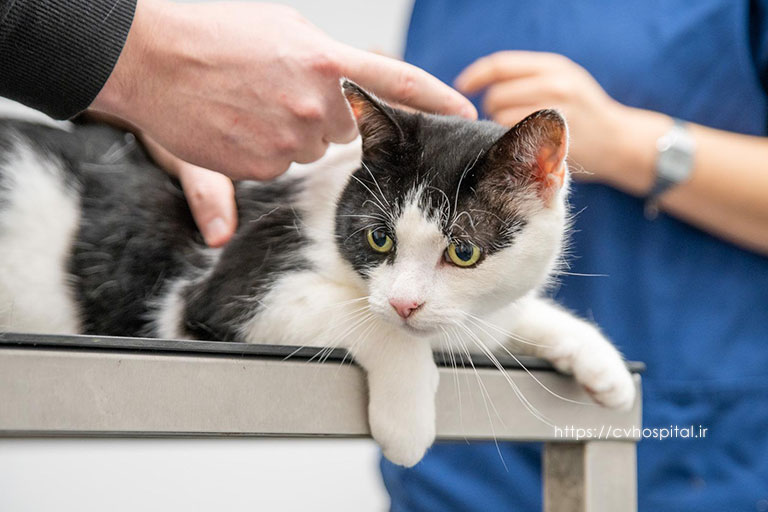








Spaying a cat is one of the veterinary recommendations aimed at enhancing health and preventing excessive reproduction of these animals. Both male and female domestic and street cats can be spayed under general anesthesia during a specialized surgical procedure, losing their ability to reproduce. However, pet owners have always had concerns about spaying their indoor cats because they are unaware of its advantages and disadvantages. This page will provide comprehensive information on the spaying process for male and female cats, as well as post-operative care strategies to shorten the recovery period.
What is spaying a cat?
Male and female cats can lose their testicles or ovaries through a surgical procedure, known as spaying a cat. This process is performed by a veterinarian in a sterile surgical room with complete medical equipment, and the cat is fully anesthetized during the procedure, experiencing no pain or stress. For more details, read the article Spaying Pets.

The cost of spaying a cat
A common question from those who have recently taken in a cat is how much spaying a cat costs and whether the cost differs for male and female cats. The answer is yes; the cost of spaying male and female cats varies, with female cats usually being more expensive. Currently, the estimated cost to spay a cat (either male or female) in 2024 depends on the gender, physiological conditions of the animal, type of services required, and factors such as anesthesia. Generally, we can say that these services have a specified approximate cost that will be communicated during your visit.
We have gathered the names of various services related to spaying cats in the table below. For exact rates and to schedule an appointment, please contact the Central Veterinary Hospital.
| Service Name | Cost |
|---|---|
| Spaying Male Cat | Contact Veterinary Hospital |
| Spaying Female Cat | Contact Veterinary Hospital |
| Spaying Male Cat with Special Cases | Contact Veterinary Hospital |
| Spaying Female Cat with Special Cases | Contact Veterinary Hospital |
| Anesthesia for Male Cat | Contact Veterinary Hospital |
| Anesthesia for Female Cat | Contact Veterinary Hospital |
Appropriate Age for Spaying Cats
It is recommended to spay cats after they reach six months of age. At this time, these animals gain reproductive capability, and spaying is suggested to prevent this. However, this procedure can happen at any time during a cat’s life and is not restricted to a specific age. It can also occur during the breeding season without causing any health issues for the cat.

Differences Between Spaying Male and Female Cats
During this procedure, male cats lose their testicles, and female cats lose their ovaries due to their different bodily structures and sexual characteristics. However, the area of the body that is incised during this procedure is different. In male cats, a small incision is made on the testicles, and the procedure is generally performed without stitches, as it heals naturally. In female cats, an incision is made on the abdomen to remove the ovaries, and stitches are applied afterwards, which could be absorbable or non-absorbable, depending on the health condition of the cat and the veterinarian’s discretion.
Is Spaying Cats Ethical?

Based on the bodily structure of cats and their living conditions, comprehensive research has been conducted on cat spaying that also examines their physical health and behavioral and psychological risks. Therefore, based on the results of this research, it can be concluded that spaying cats is an approved practice for living in urban and even household environments and is considered ethical. This process improves the behavior and movements of both male and female cats while preserving their health and significantly reducing the risk of various diseases.
Advantages of Spaying Female Cats
Female cats benefit the most from this procedure compared to male cats since their reproductive system, through sexual activity and mating, can serve as a gateway for various diseases. The advantages include the following:
- Prevention of their heat cycle (instinctual behavior for reproduction and territory protection) every month.
- The behavior of female cats improves after spaying, especially during the hot season when their behavior changes to prepare for pregnancy.
- Prevention of unwanted pregnancies.
- Protection against uterine and ovarian cancer.
- It is a preventive measure.
important for infectious uterine diseases such as pyometra.
- It prevents their periods and hormonal changes during this time.
Benefits of Neutering Male Cats
Male cats behave for a short or long period after this procedure similar to unneutered cats. This happens because they still have testicles since, during the neutering surgery for male cats, only the testicles are removed. However, there are significant positive behavioral and health differences that arise for them, the most important of which are mentioned below:
- The behavior of male cats improves after neutering, and aggressive behaviors to defend their territory decrease.
- It reduces the chances of running away from home or a fixed position in their living environment, which decreases their accident rates outside the home.
- It prevents them from developing testicular cancer.
- It significantly reduces the risk of contracting Feline Immunodeficiency Virus (FIV).
- It greatly diminishes their urine odor.
- It significantly reduces their maintenance costs (treatment and medication).

Complications of Neutering Cats
Every surgical procedure comes with certain risks and complications, and neutering cats is no exception. However, comparing its benefits to the disadvantages, it can be said that the complications can be overlooked.
- After this procedure, weight gain occurs in felines, which can be managed with a proper diet and recommended physical activity.
- Urinary incontinence may be observed in cats after the surgery, but this is very rare and typically only seen in cats that are neutered under six months of age.
Care Guide Before and After Surgery
Before neutering the cat, food and water should be withheld for at least 12 hours to ensure the stomach is empty during the surgery and to reduce potential risks during anesthesia. After the surgery, caretakers need to be aware of certain points to ensure a short recovery period. Post-operative care for neutering male and female cats differs solely due to the area undergoing surgery.
- After the cats regain consciousness, transfer them to a warm and soft location at home.
- For about 12 to 48 hours while they are under anesthesia, keep the environment quiet and warm.
- For a few days after the operation, designate a specialized environment like a bedroom for their care to prevent excessive jumping (especially for females).
- Use a suitable neck collar to prevent them from licking the wound site.
- Provide antibiotics after the neutering with an appropriate diet.
- A check-up for the cats a few days after the surgery is essential. Many male cats do not require a check-up because they do not have stitches and are in good health.

Recovery Period After Neutering in Cats
Cats require 14 days for complete recovery after surgery. However, this recovery time is longer for female cats. Male cats, after two to three days of rest, fully recover and can go outside and resume their usual activity. They should be taken to the veterinarian for a check-up and stitch removal after 7 to 14 days. Rest is mandatory for female cats for two weeks post-surgery and stitch removal to prevent loosening of the stitches and swelling after the neutering of female cats. After neutering, cats usually do not feel like eating for 12 to 24 hours; nonetheless, fresh water should be abundantly available. If they still do not want to eat after 24 hours, consult the treating veterinarian.
Final Thoughts
Neutering cats not only has positive consequences for their physical health but also improves their intrinsic behavioral movements. By neutering cats, pregnancies in female cats and excessive reproduction are prevented, and infectious, cancerous diseases, etc., are also controlled in these animals. By adhering to post-operative care guidelines, the recovery period can be shortened for them to achieve complete recovery sooner. In this article, we covered everything you need to know about neutering cats; to schedule an appointment, simply call the numbers listed on the website, and our colleagues at the Central Veterinary Hospital will assist you.
Frequently Asked Questions
What does neutering a cat mean? In a surgical procedure under anesthesia, the testicles and ovaries of male and female cats are removed.
Will a neutered male cat go into heat? No, male cats do not have the ability to mate or produce sperm after the removal of their testicles. Going into heat after surgery is specific to female cats.
What happens if a male cat is not neutered? They can engage in multiple matings, leading to excessive pregnancies in female cats and suffering from various diseases. Aggression is one of the risky behaviors of unneutered male cats.
Does a cat become calmer after being neutered? Yes, with no hormonal changes that previously occurred in their reproductive system, they tend to exhibit calmer behavior than before.
How can we tell if a female cat has been neutered? Female cats do not go into heat and lose their fertility after being neutered.
Is neutering a cat done for free? No. Is there a difference between a street cat? No, there is no difference.
Source: pdsa