



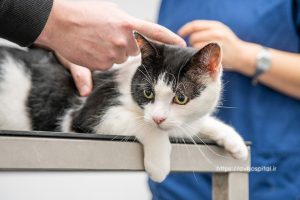


Brain diseases in pets are one of the challenges that primarily torment the animals themselves and secondarily their caregivers. Owners of pets suffering from brain tumors, vascular problems, or growth disorders feel very hopeless when visiting a veterinarian, as they believe these diseases have no treatment. However, this perception is incorrect; fortunately, in many cases, with new scientific advancements in surgical medicine, these issues can be surgically addressed and improved. We will discuss the brain problems of pets, their symptoms, and other related issues below.

Components and Functions of the Brain
The brain, spinal cord, and peripheral nerves together make up the nervous system. Peripheral nerves transmit information between the brain and the rest of the body. The brain is responsible for coordinating the functions of the body and is composed of several parts that have different tasks. For example, the brain hemispheres are the sites of conscious thought and memory. The cerebellum is responsible for precise control and coordination of movement. The thalamus and hypothalamus control sleep, hormone secretion, thirst, appetite, and sex drive. The pons and medulla also oversee vital body functions, such as heart rate and breathing. All mammals’ brains share the same basic components, but their sizes vary depending on the species. For example, dog breeds have larger olfactory bulbs than humans because they use their keen sense of smell for hunting food. Humans, on the other hand, have very large brain hemispheres, indicating a greater capacity for thought compared to other species. There are no blood vessels in the brain, and in fact, the brain is separated from the rest of the body by the blood-brain barrier. The function of the blood-brain barrier is to prevent common bacterial infections. Viruses can cross the blood-brain barrier, but antibodies cannot. This makes brain problems much more serious.

Symptoms of Brain Diseases in Pets
As mentioned, the brain has many vital roles and functions, including controlling movement, vision, hearing, taste, memory, problem-solving, emotions, hormone regulation, and balance. Each of these functions is performed by a different part of the brain. Therefore, the symptoms in pets vary depending on where the problem is located in the brain. As a caregiver, you must be very vigilant to promptly address any suspicious signs you observe. The warning signs include:
- Vision problems
- Smell problems
- Hearing problems
- Facial asymmetry
- Drooping eyelids
- Squinting
- Any suspicious eye issues
- Seizures
- Balance problems
- Lack of coordination in limb movements
- Circular walking
- Problems with recognition and habitual reactions (e.g., not recognizing the owner, losing sleeping spots, not finding toys, etc.)
- Confusion
Note: In younger animals, certain disorders, such as deformities occurring at the foramen magnum (large hole at the back of the skull) or in the early cervical vertebrae, may cause the accumulation of cerebrospinal fluid inside the skull, resulting in some of these signs appearing in them as well. Therefore, whether the animal is young or old, you as a caregiver should be sensitive to these symptoms.

Causes of Neurological Disorders in Pets
Some neurological diseases can affect any part of the nervous system, while others occur only in specific areas of the nervous system. The types of disorders that affect the nervous system include:
- Degenerative causes
- Congenital anomalies and disorders (congenital defects)
- Metabolic problems
- Cancerous causes
- Dietary problems
- Inflammation
- Infections
- Trauma
- Circulatory issues in the nervous system
 Examples of brain diseases in pets
Examples of Brain Diseases in Pets
There is a wide range of brain diseases that affect pet brains. Most of these diseases, especially tumors, occur in older ages. Some of the most significant brain disorders in pets include:
- Seizures; this condition occurs due to an abnormal burst of electrical activity in the brain. Causes of seizures can be divided into three categories: problems that occur outside the brain but have a secondary impact on it, structural problems within the brain, and idiopathic epilepsy, which is the most common cause of seizures in dogs.
- Vestibular disease; this occurs when a pet has balance problems, characterized by a tilted head, poor coordination, and unusual eye movements. It may appear to you as if the pet is dizzy.
- Brain tumors; the formation of brain tumors in older dogs and cats is relatively common. These tumors can be classified into primary (formed from brain cells and coverings) or secondary (originating from elsewhere in the body and spreading to the brain).
- Meningitis; a condition where the meninges or protective layers around the brain and spinal cord in the central nervous system become inflamed. In dogs, this inflammation can be caused by infectious or non-infectious sources. Identifying the primary cause of meningitis in dogs is crucial, as it affects treatment and prognosis.
- Encephalitis; brain swelling that may have infectious or non-infectious causes. Clinical signs may include seizures, imbalance, circular walking, staggering, and blindness. Small breeds like Yorkshire Terriers, Maltese, Chihuahuas, and Pugs are more prone to this condition.
- Stroke; a stroke may occur due to bleeding in the brain caused by high blood pressure, blood clotting disorders, or cancer metastasis. Other causes include blockage or obstruction of blood vessels due to hypothyroidism, kidney disease, heart disease, or Cushing’s disease.
- Brain infections; including bacterial, fungal, viral infections, and more.
- Degeneration or decay; pathological retrograde changes in nerve cells or tissue that may result in impaired or completely lost function of the cell or tissue.
- Brain abnormalities such as hydrocephalus (a condition where the accumulation of cerebrospinal fluid causes enlargement of the head and consequently intracranial pressure, brain damage, and even death).
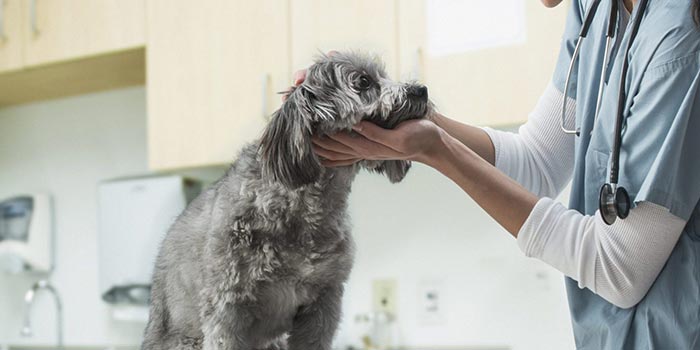 Diagnosis of brain diseases in pets
Diagnosis of brain diseases in pets
Diagnosing brain diseases is not solely based on the symptoms reported by pet owners; in fact, there are several pairs of cranial nerves whose functions are examined during the examination. Functions such as vision, hearing, smell, swallowing ability, facial symmetry, and cognition, understanding, and awareness of the surrounding environment are among the most important of these functions. Therefore, if your pet shows one or several warning signs or even sometimes other unusual behaviors (besides the mentioned symptoms), contact our colleagues at the Central Veterinary Hospital as soon as possible for the necessary guidance.
Treatment of brain diseases in pets
As we mentioned at the beginning, treating brain disorders in pets is not an impossible or unrealistic task. Nowadays, unlike in the past, many pets suffering from brain disorders can be improved with medication or surgery, leading to a longer lifespan and a better quality of life. Naturally, the type of treatment and surgery depends on the type and severity of the disease. The surgeon will clarify these matters for you after the necessary examinations.
 Brain diseases in pets
Final thoughts
The brain is an incredibly important and vital organ, and brain disorders can disrupt the body’s functions. Animals suffering from brain injuries should not be left to suffer. Therefore, if you notice any suspicious signs in your pet, take them to a veterinarian immediately. If the animal has fallen and lost consciousness, it requires urgent attention. Our colleagues at the Central Veterinary Hospital will examine the pet’s brain issues and, if there is a brain lesion, will perform the necessary treatments and surgeries to help your beloved pet regain its health as much as possible.